Gorilla Trekking in Uganda: When a Broken Plane Led to a Bucket List Adventure
/In January, we set off for Rwanda with big plans and even bigger excitement. But just as we were cruising through the skies, our plane… broke. Mid-air. Yep—our flight turned around and we ended up back where we started. And with that unexpected detour, we missed the most anticipated part of the trip: trekking to see mountain gorillas.
But we weren’t giving up that easily.
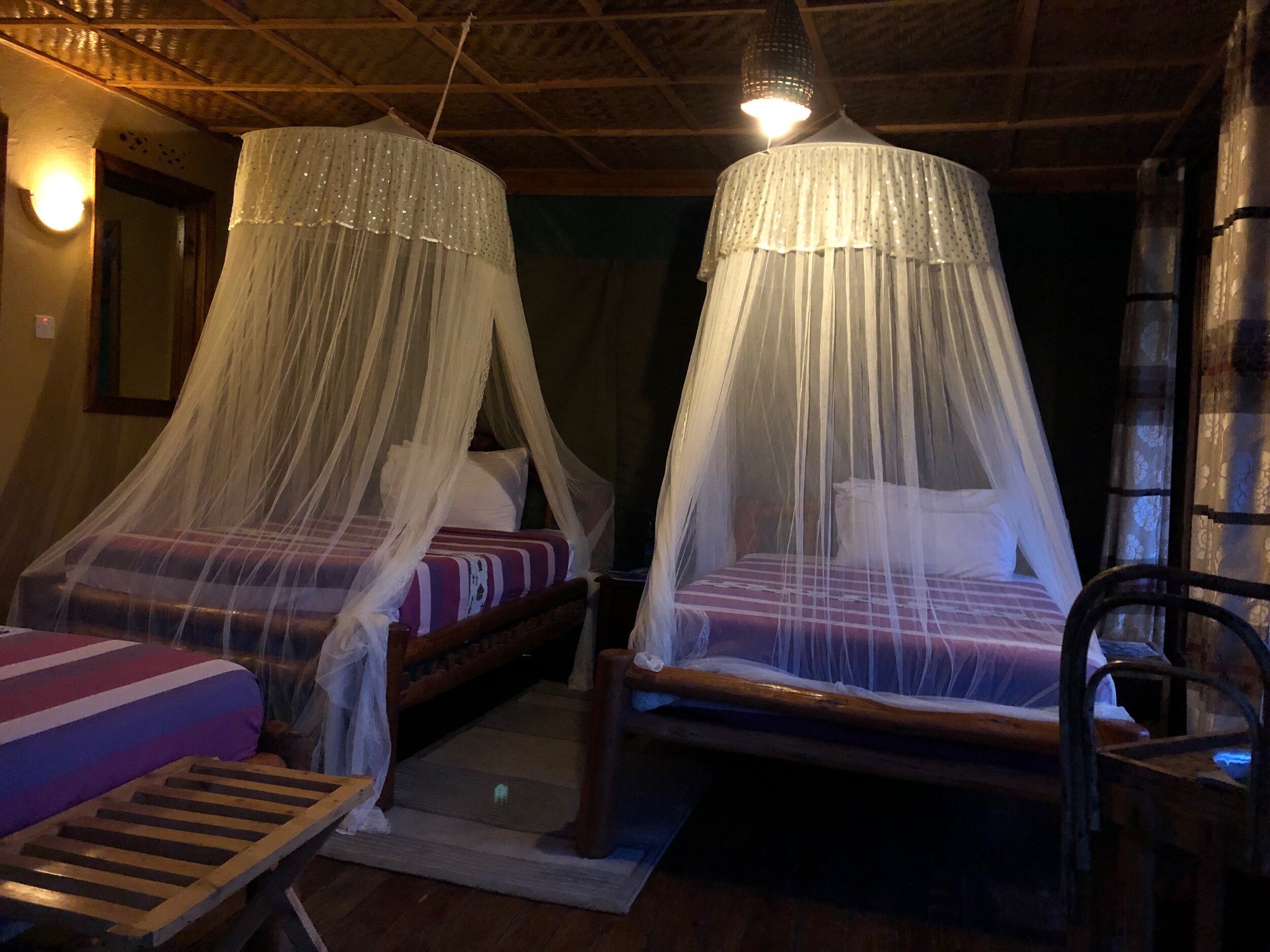
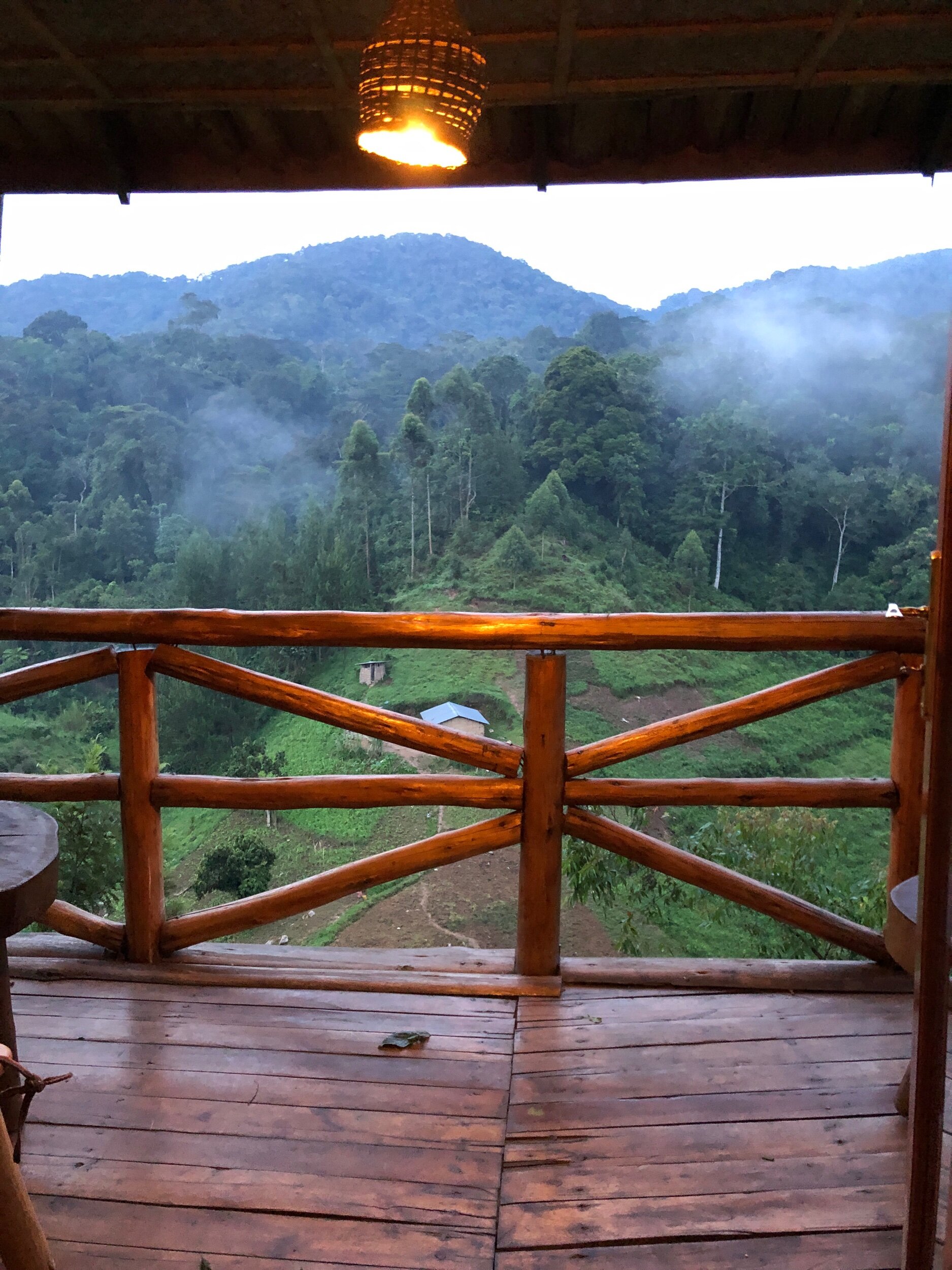
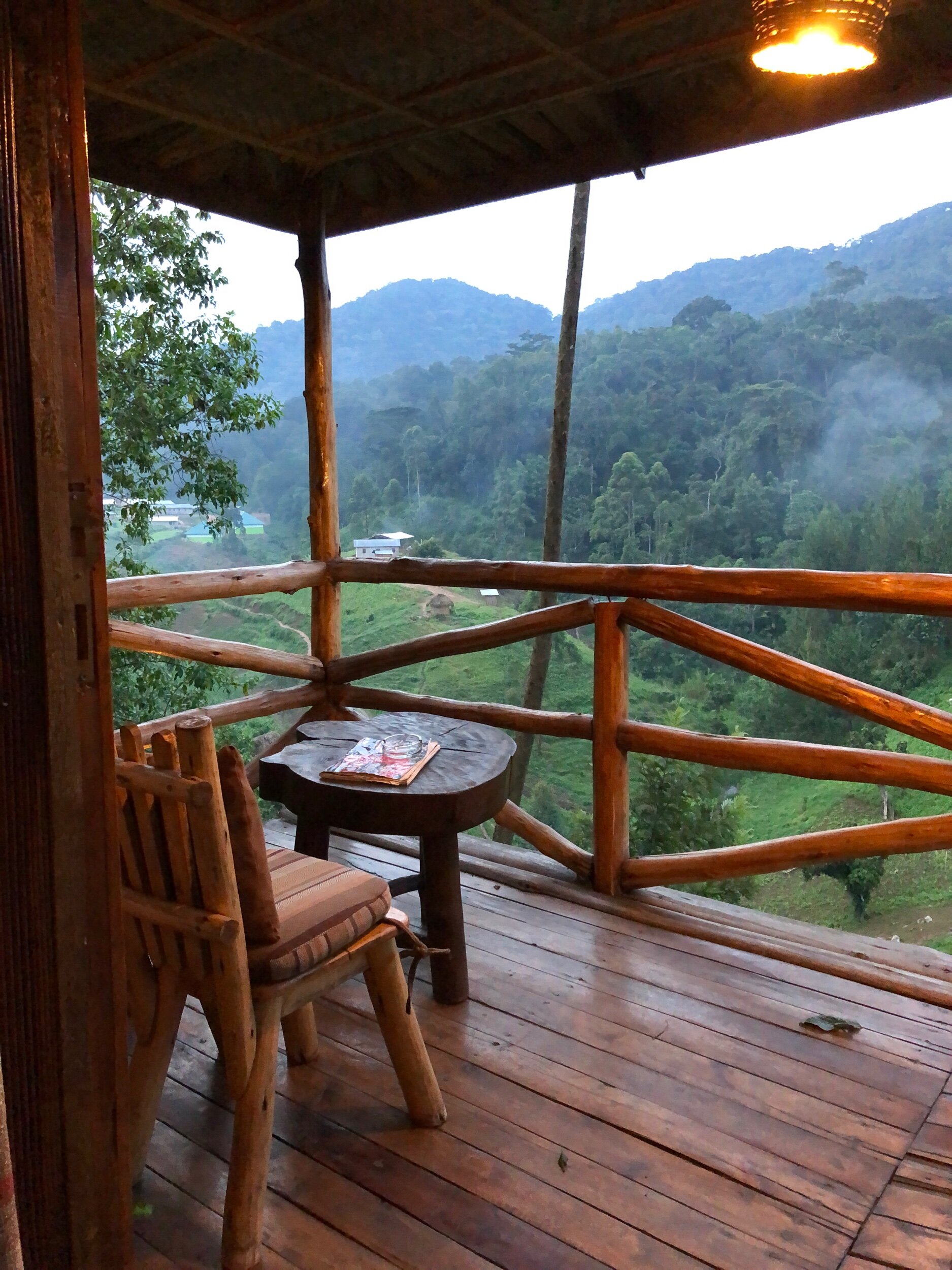
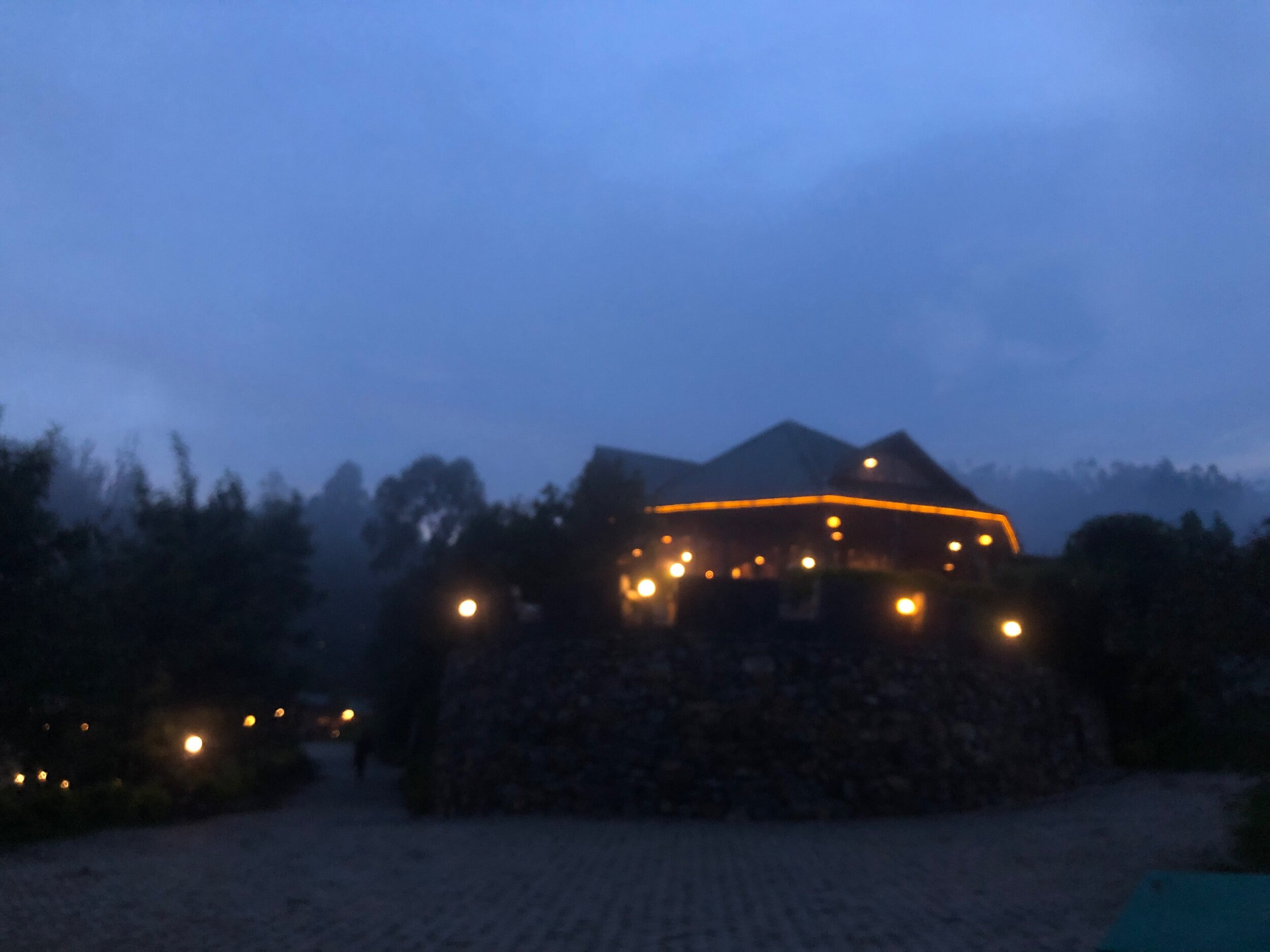
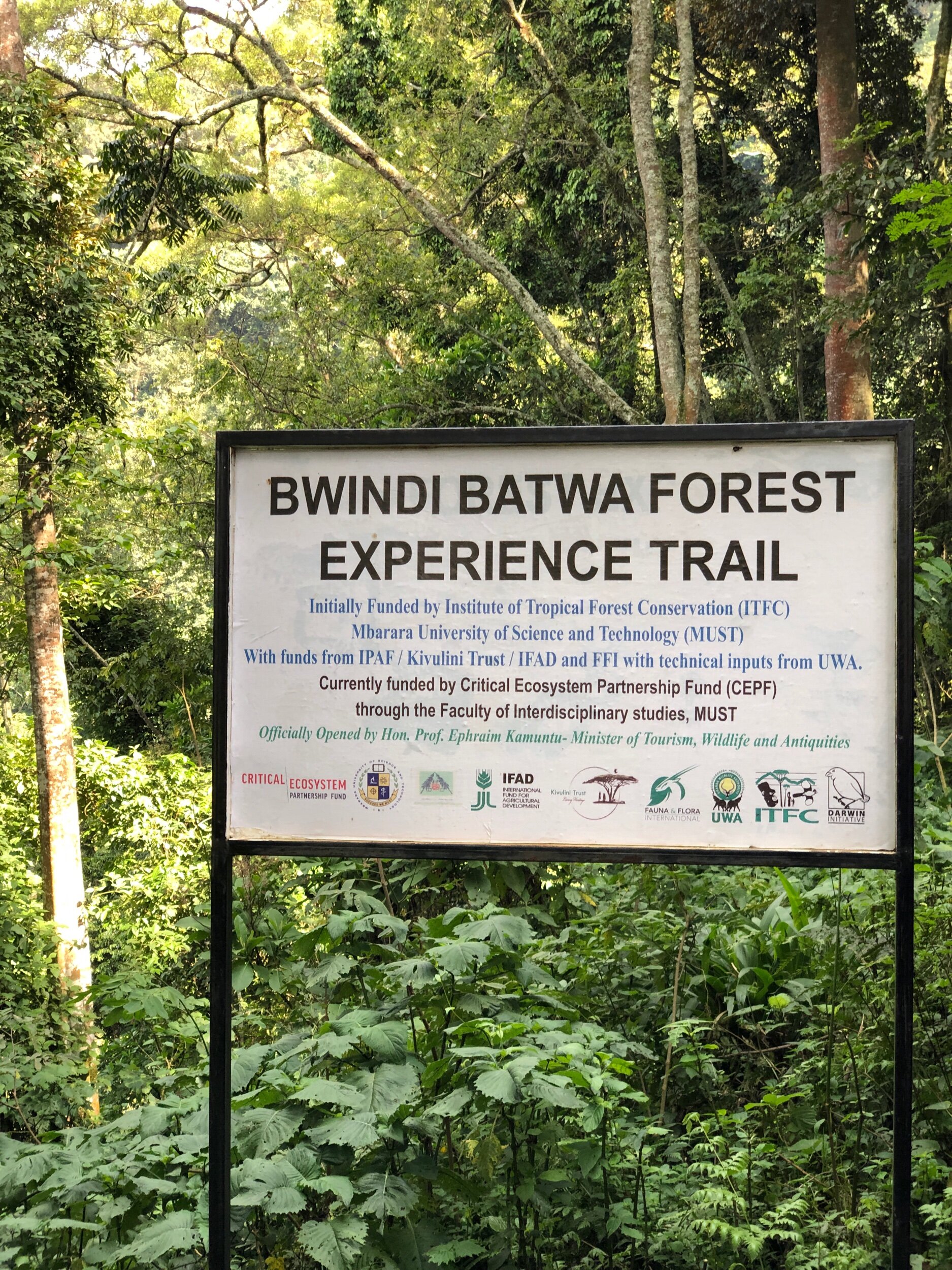
Once we got home, we regrouped, rebooked, and came back with an even bigger itinerary and a lot more determination. This time, we made it an overnight trip instead of a quick day trek—and honestly, I’m so glad we did. Staying at Rushaga Gorilla Lodge, tucked inside Uganda’s stunning Bwindi Impenetrable National Park, was a major highlight. Cozy, welcoming, and perfectly located just minutes from the trek start points—it was everything we needed.
Our guide, Christopher, picked us up right at 8 AM from our guesthouse in Kigali, and from there, our second attempt at gorilla trekking was finally underway.
Why We Chose Uganda Over Rwanda
One of the biggest deciding factors? The gorilla permits.
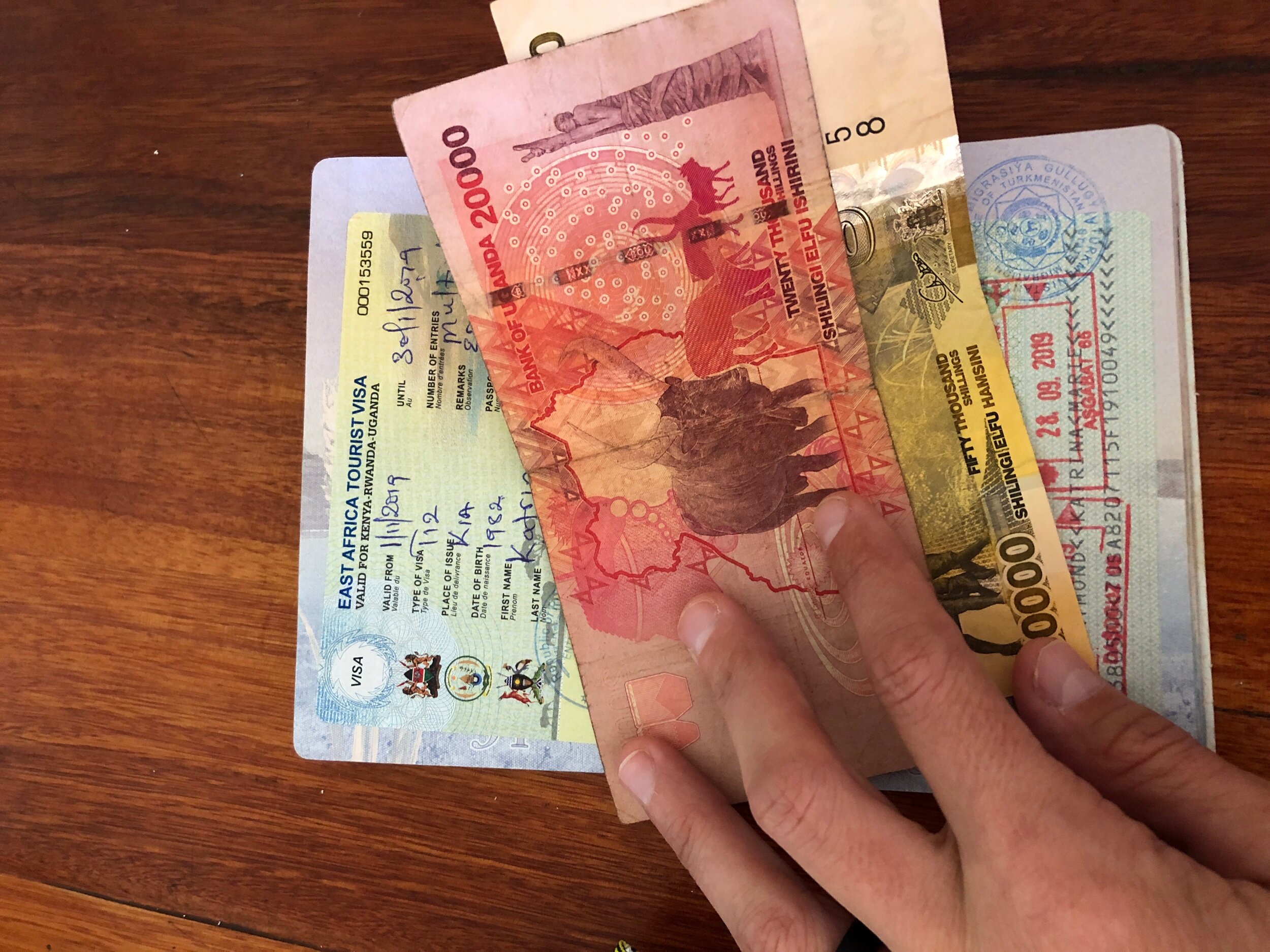
Uganda permits are currently $800 per person (as of July 2025)
Rwanda permits are $1,500 per person
The experience is incredible either way, but if you’re traveling with a group or family, the savings in Uganda can be significant—and the trek is just as magical.
What’s Included in the Safari Package
Every tour company is a little different, but here’s what was included in ours (and what I’d recommend looking for):
Gorilla trekking permit
1 night accommodation (we chose mid-range, triple room)
All meals
Bottled water
Private 4x4 safari vehicle
Fuel
English-speaking driver/guide
Hotel pickup and drop-off in Kigali
Optional stop at Lake Bunyonyi or Lake Mutanda
Day 1: Kigali to Bwindi (With a Few Twists)
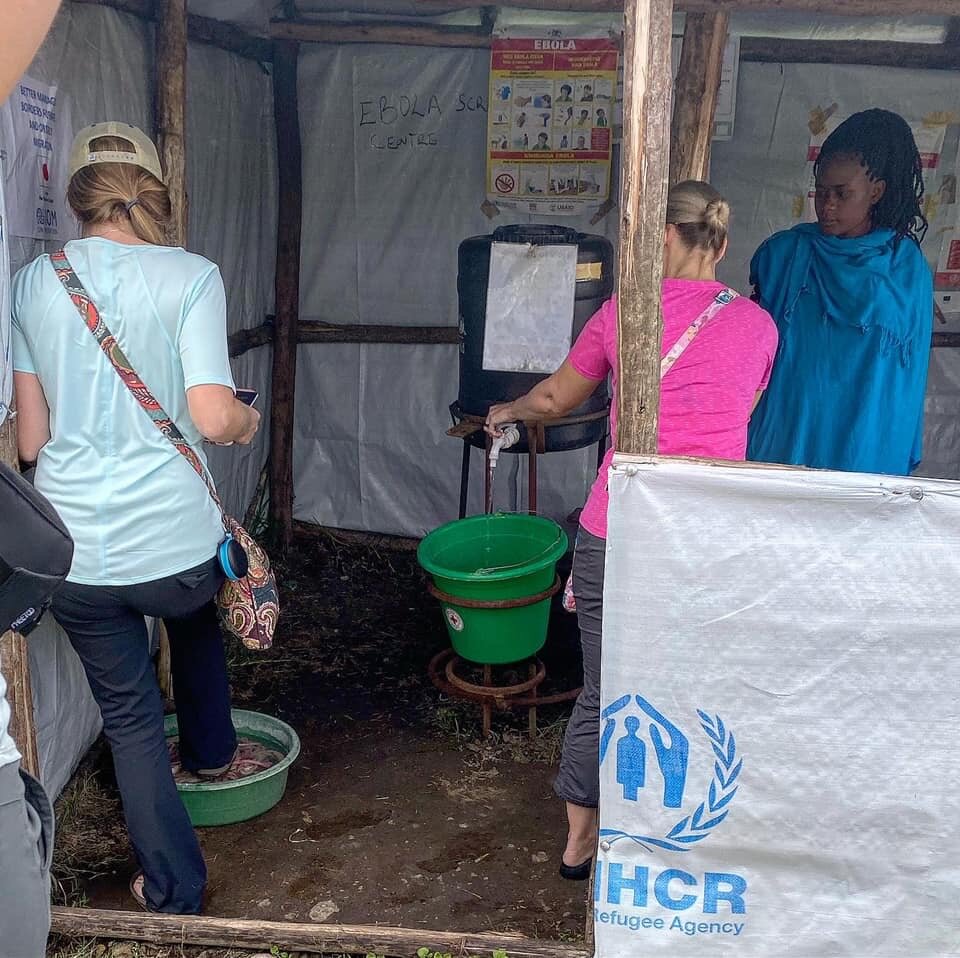
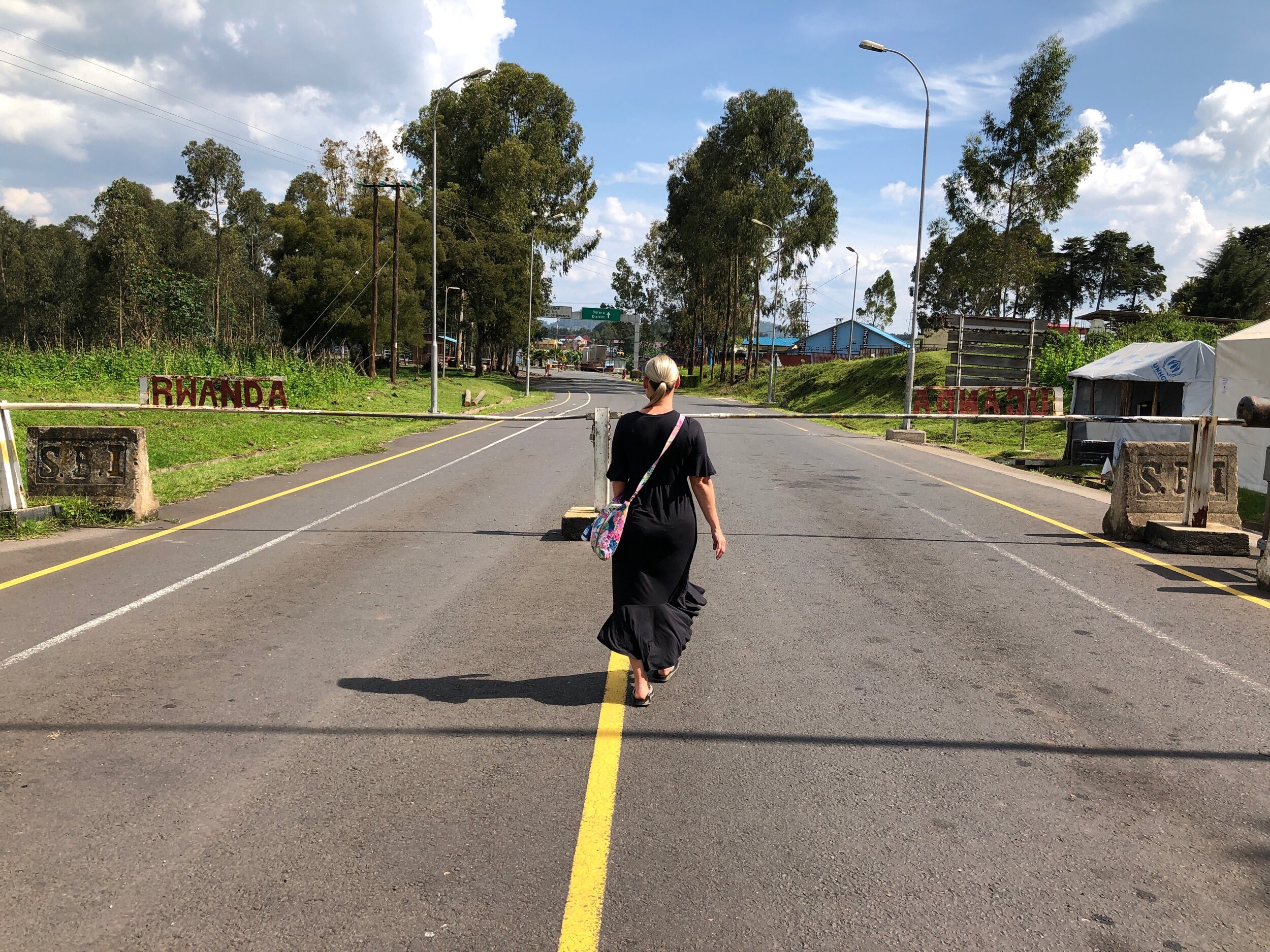
The drive from Kigali to the Bwindi area takes about five hours—depending on road conditions. We traveled during rainy season, which meant some roads were washed out and, to add another layer of excitement, we had to pass through Ebola checkpoints at the border. (All standard precautions, nothing alarming.)
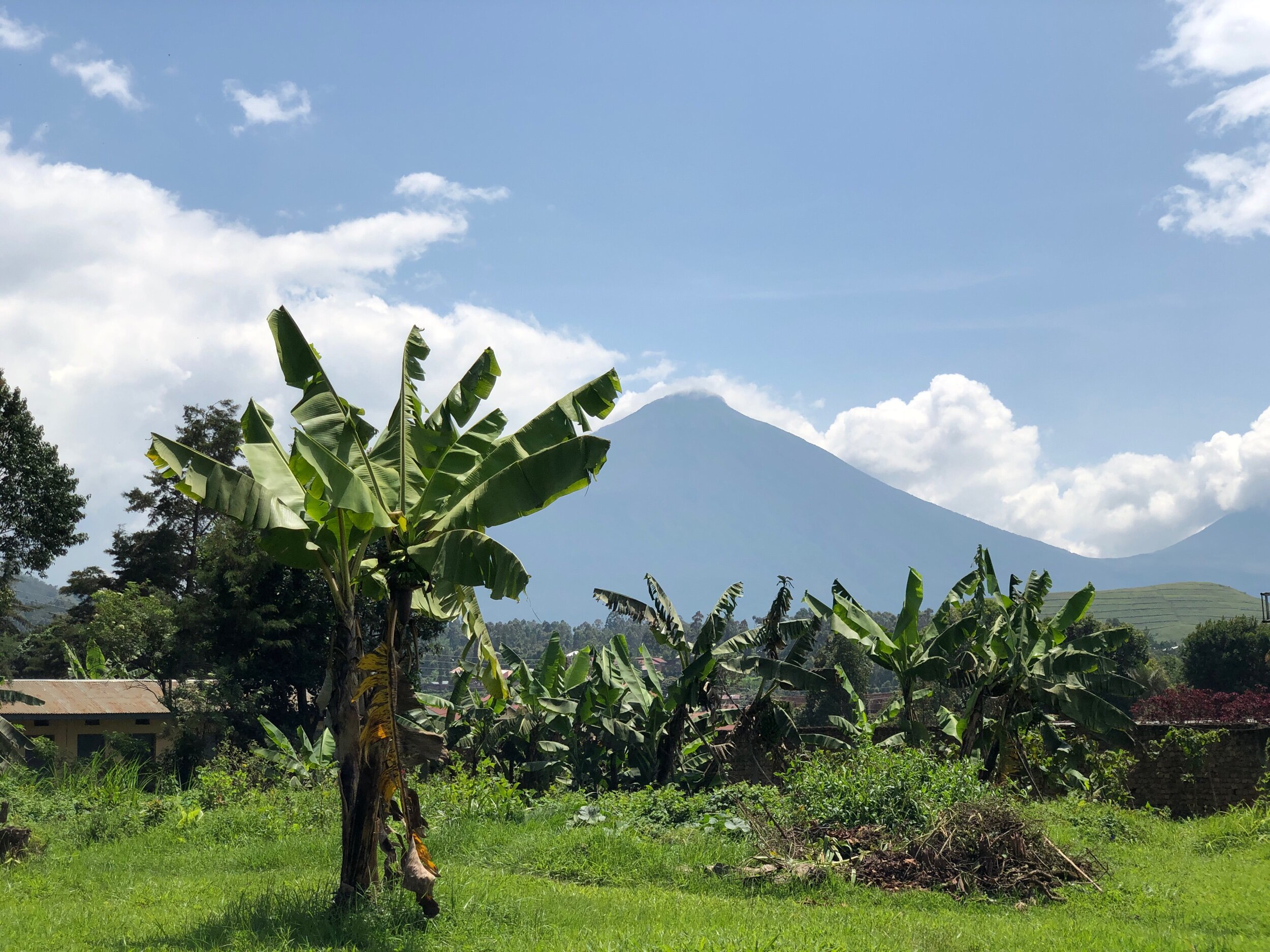
We originally planned to stop for lunch at The Coffee Pot Café, but it was closed (note: closed Sundays!), so we made an impromptu stop across the street at a nearby hostel. No complaints though—the view of Volcanoes National Park from the courtyard made the detour completely worth it.
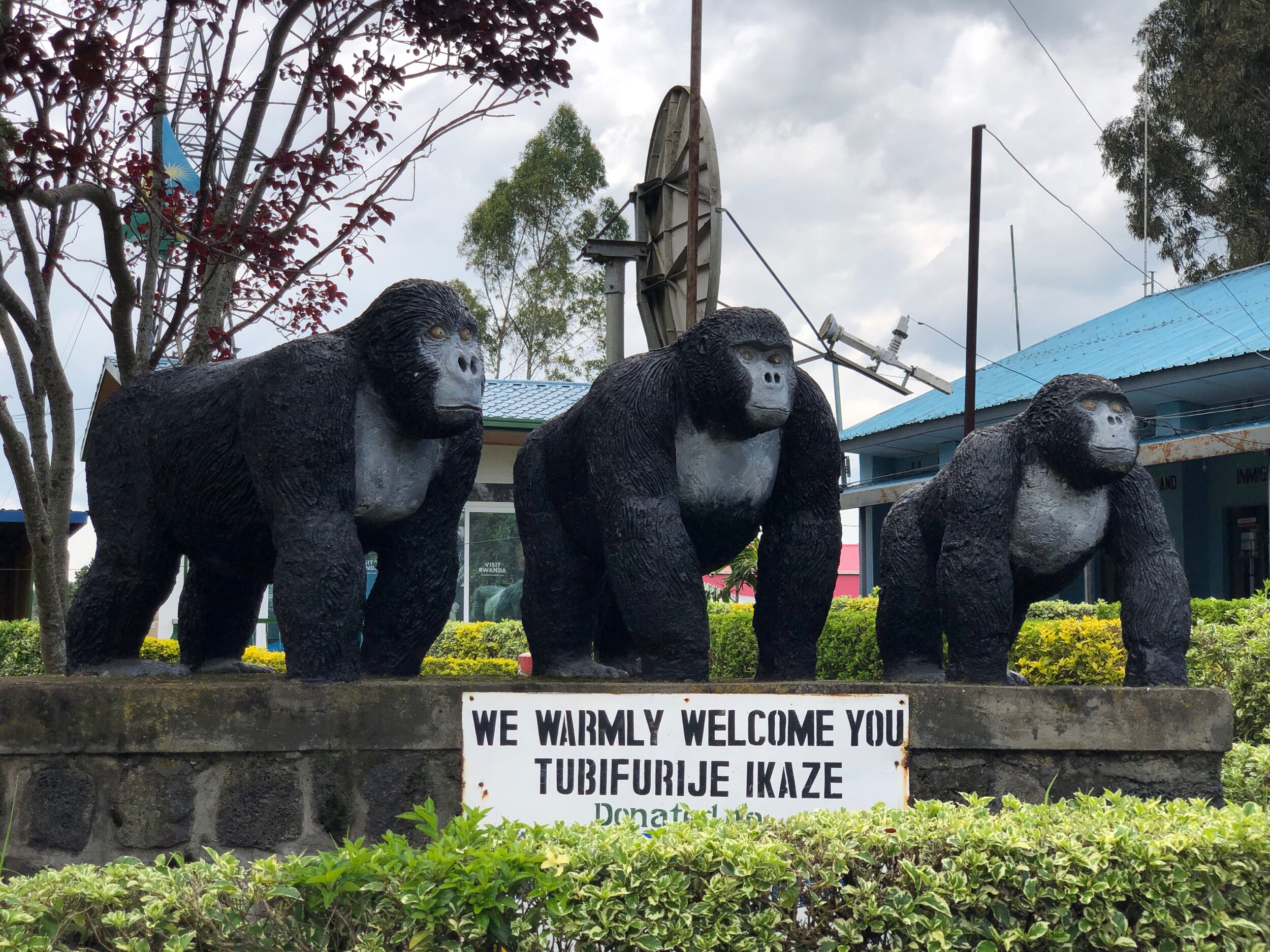
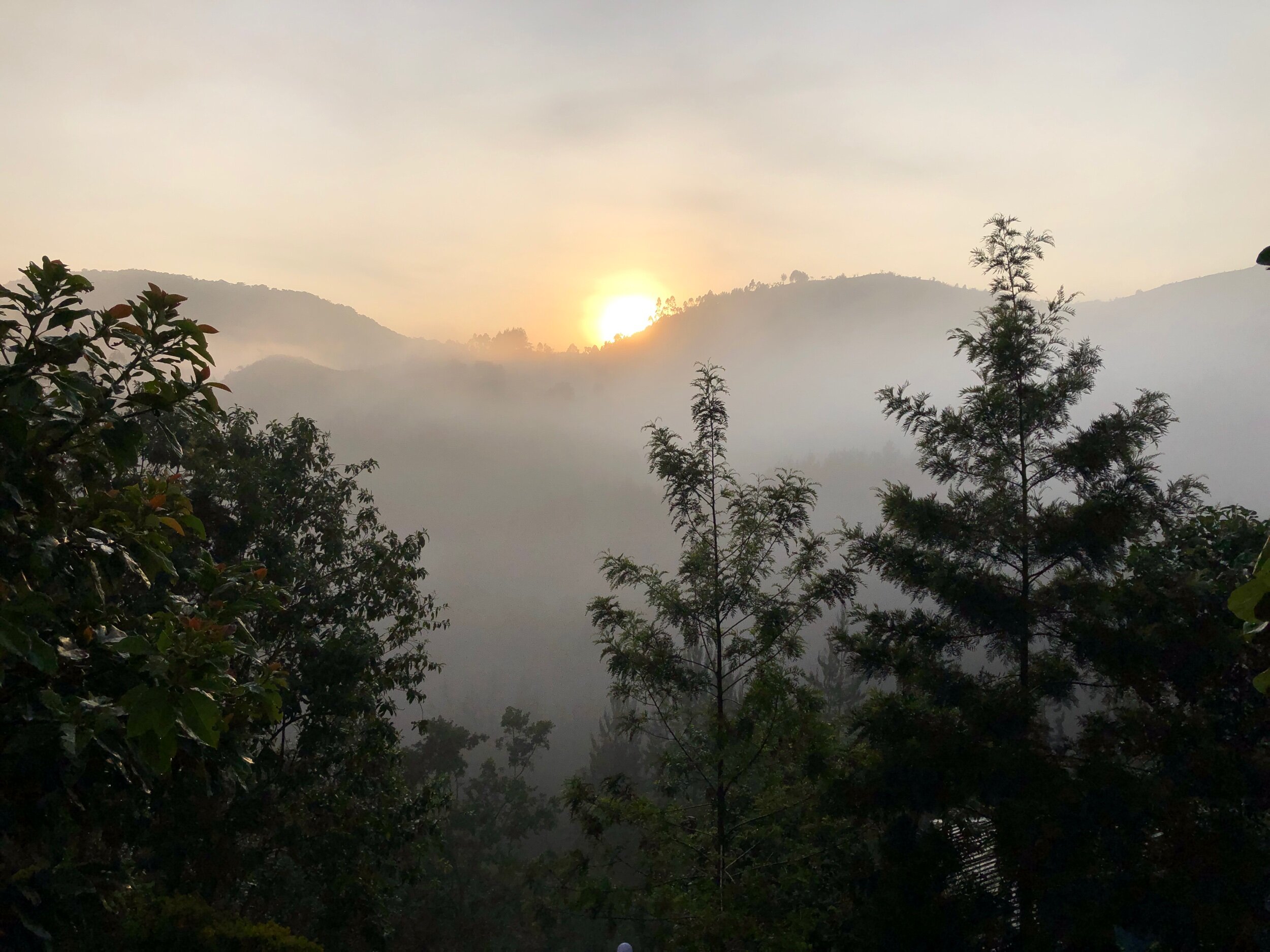
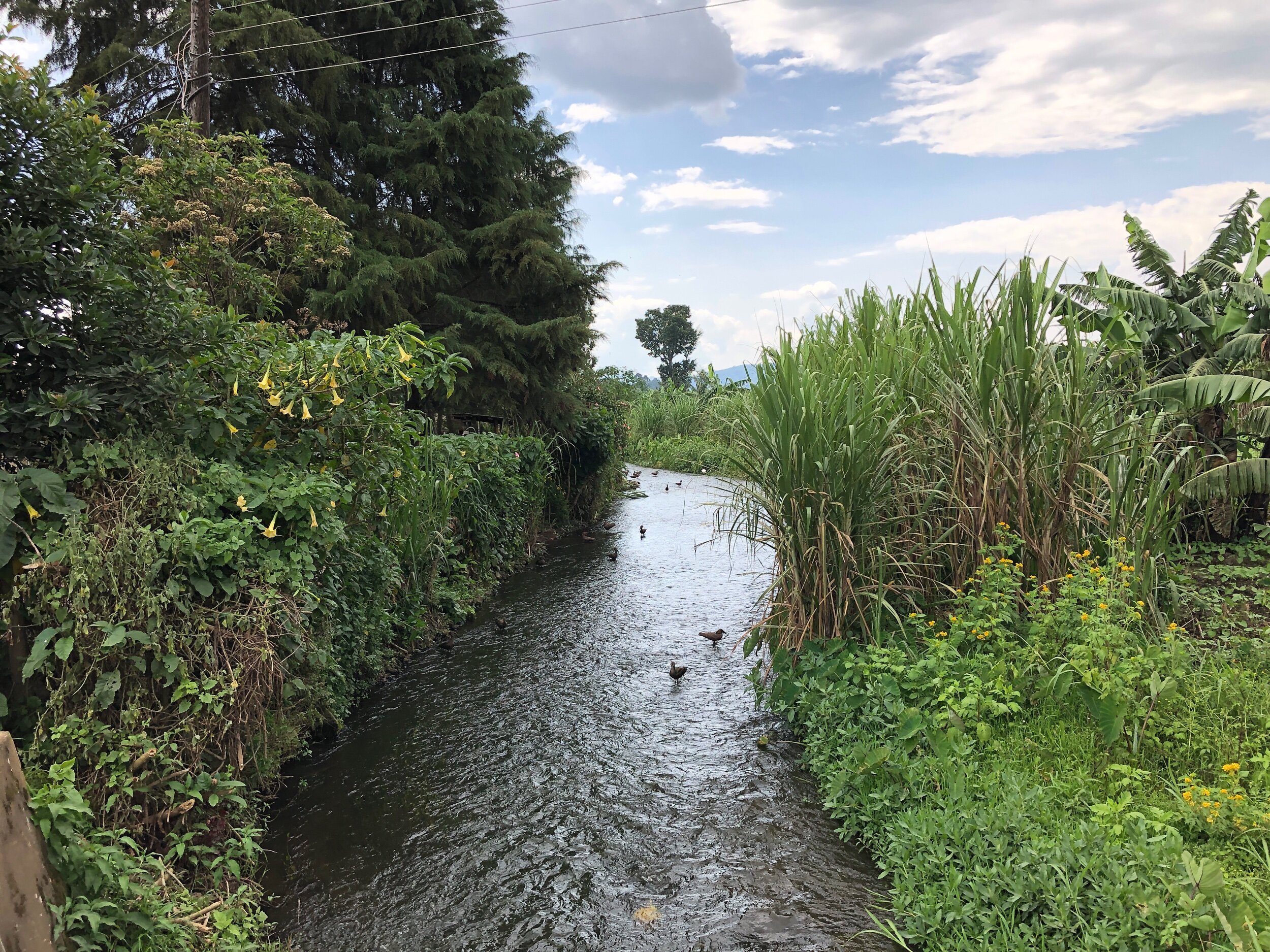
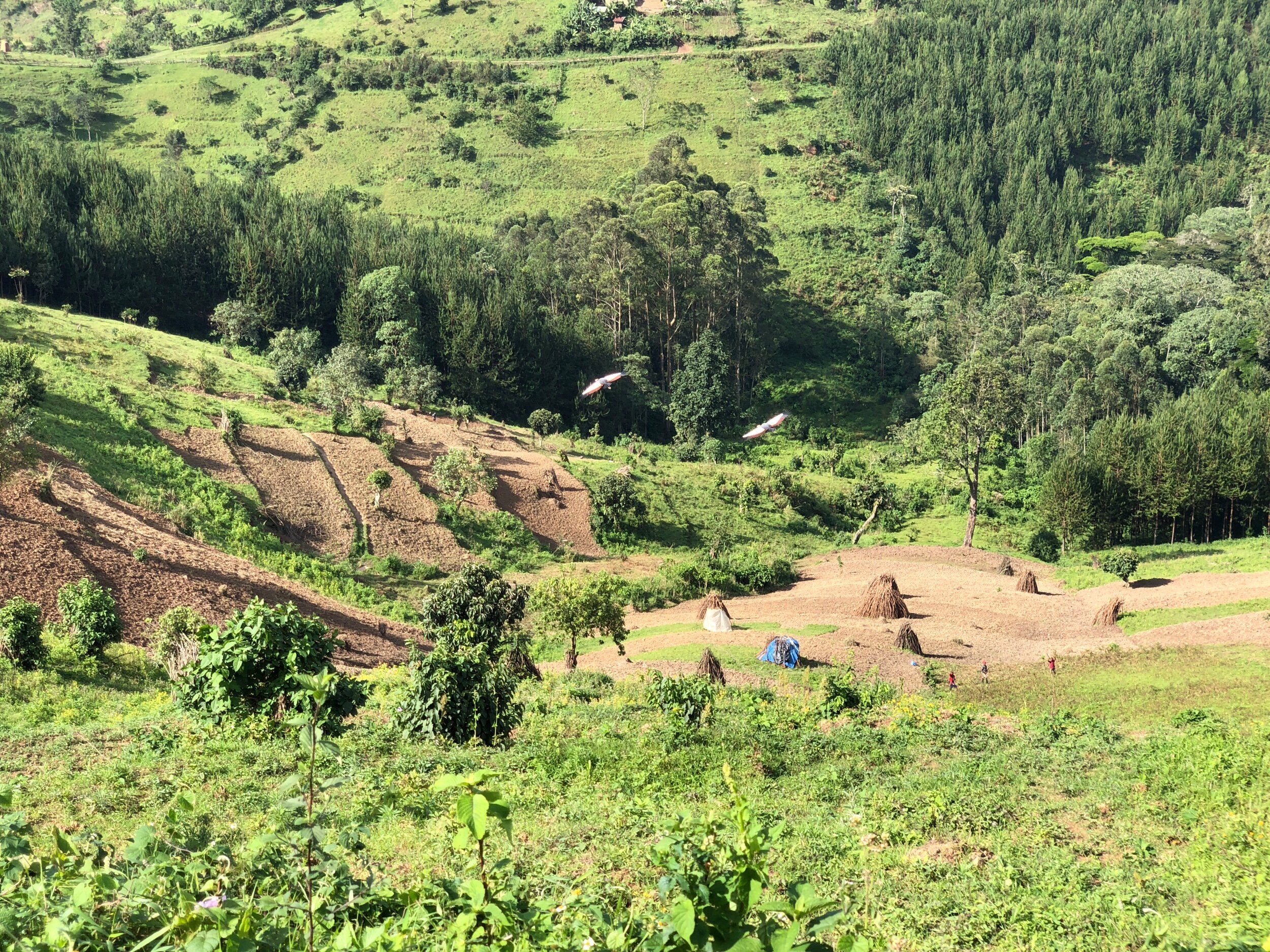
The drive through the hills toward Bwindi takes you past remote villages and sparkling lakes—this part of Uganda is often called “The Switzerland of Africa,” and for good reason.
Day 2: Gorilla Trekking with the Mucunguzi Family
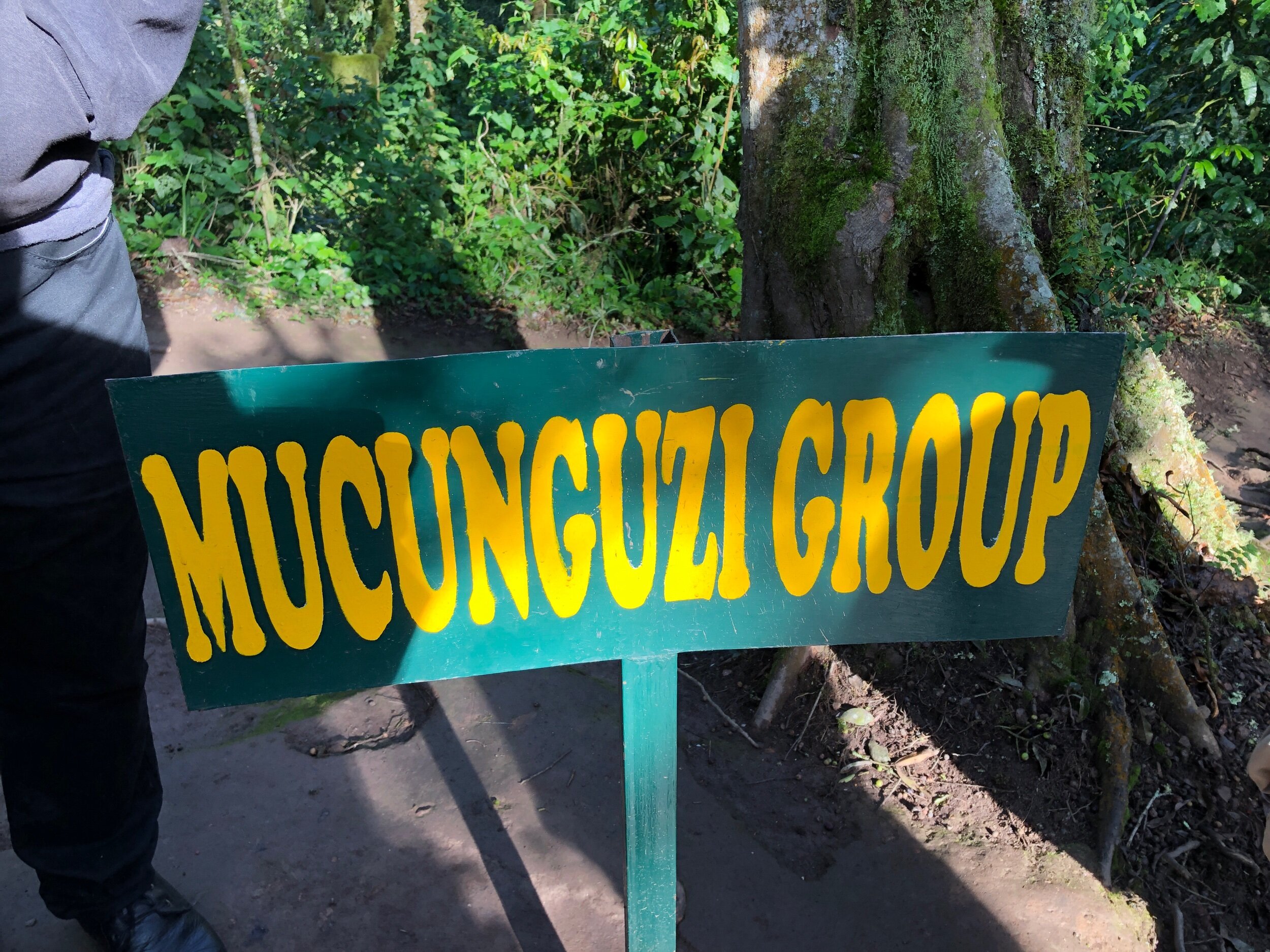
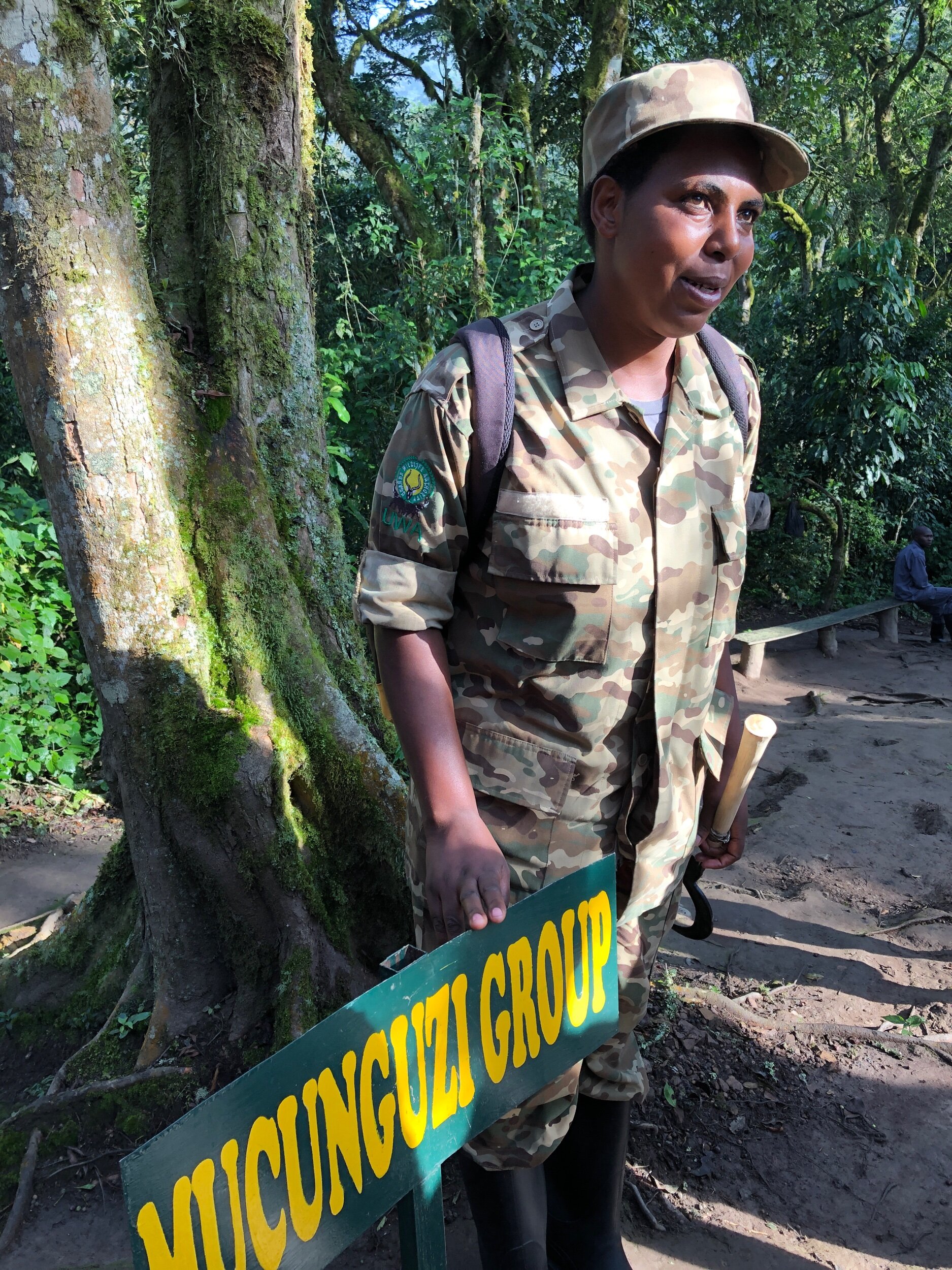
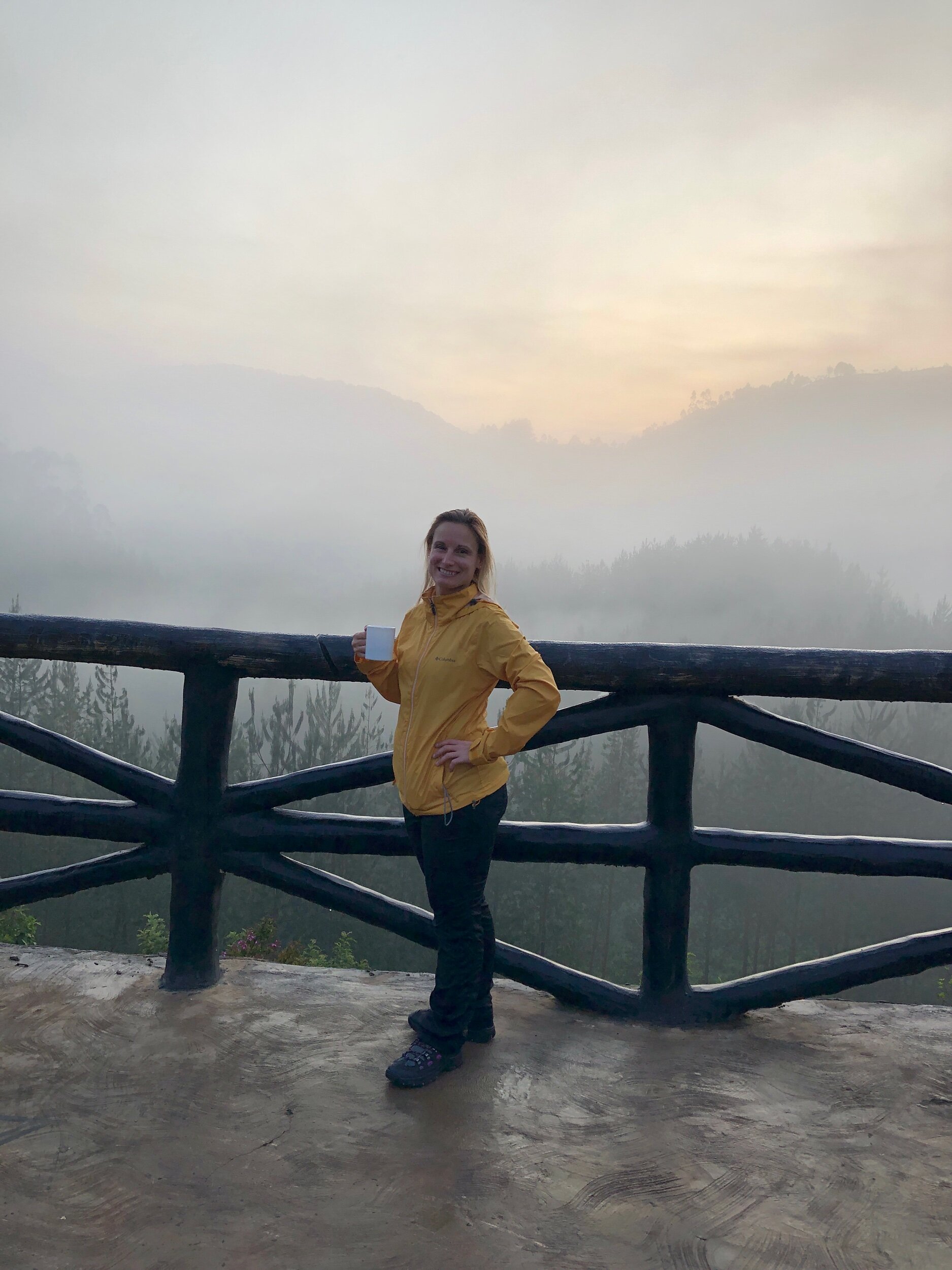
We had an early morning meetup with the rangers and were assigned to track the Mucunguzi gorilla family—a group of eight that included one silverback male and three adorable babies.
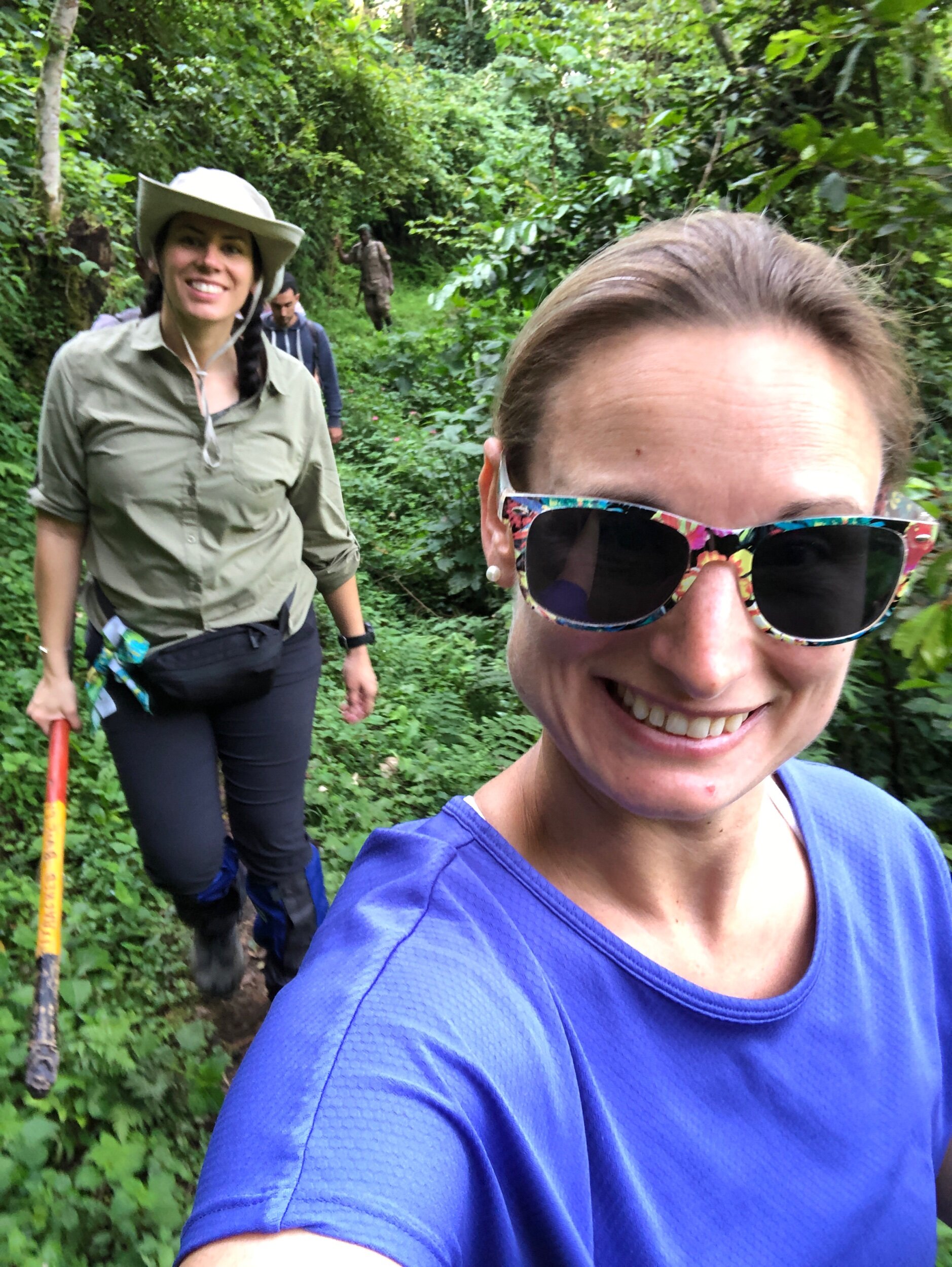
There’s no shortage of packing lists online, but here’s what I found truly essential:
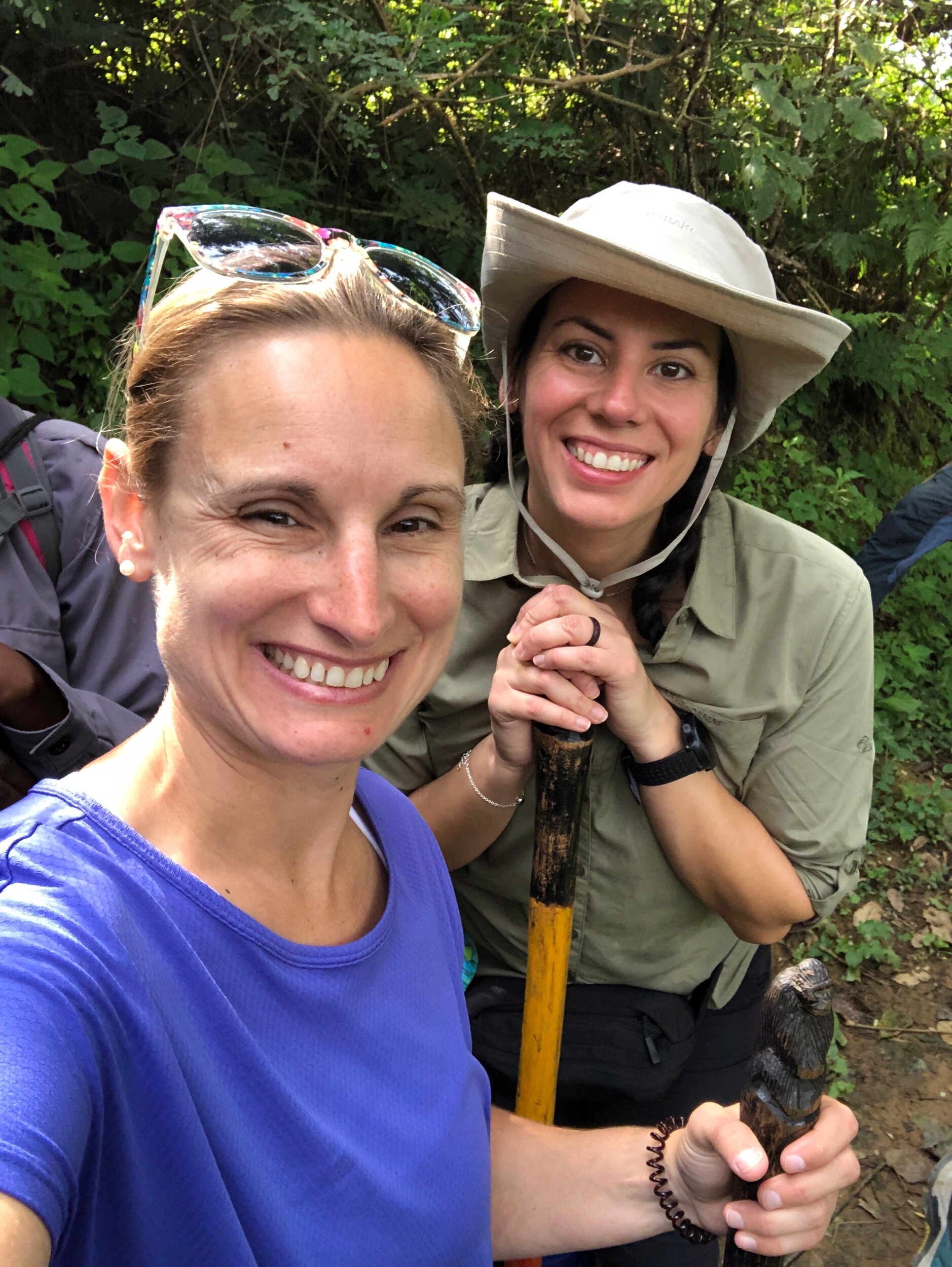
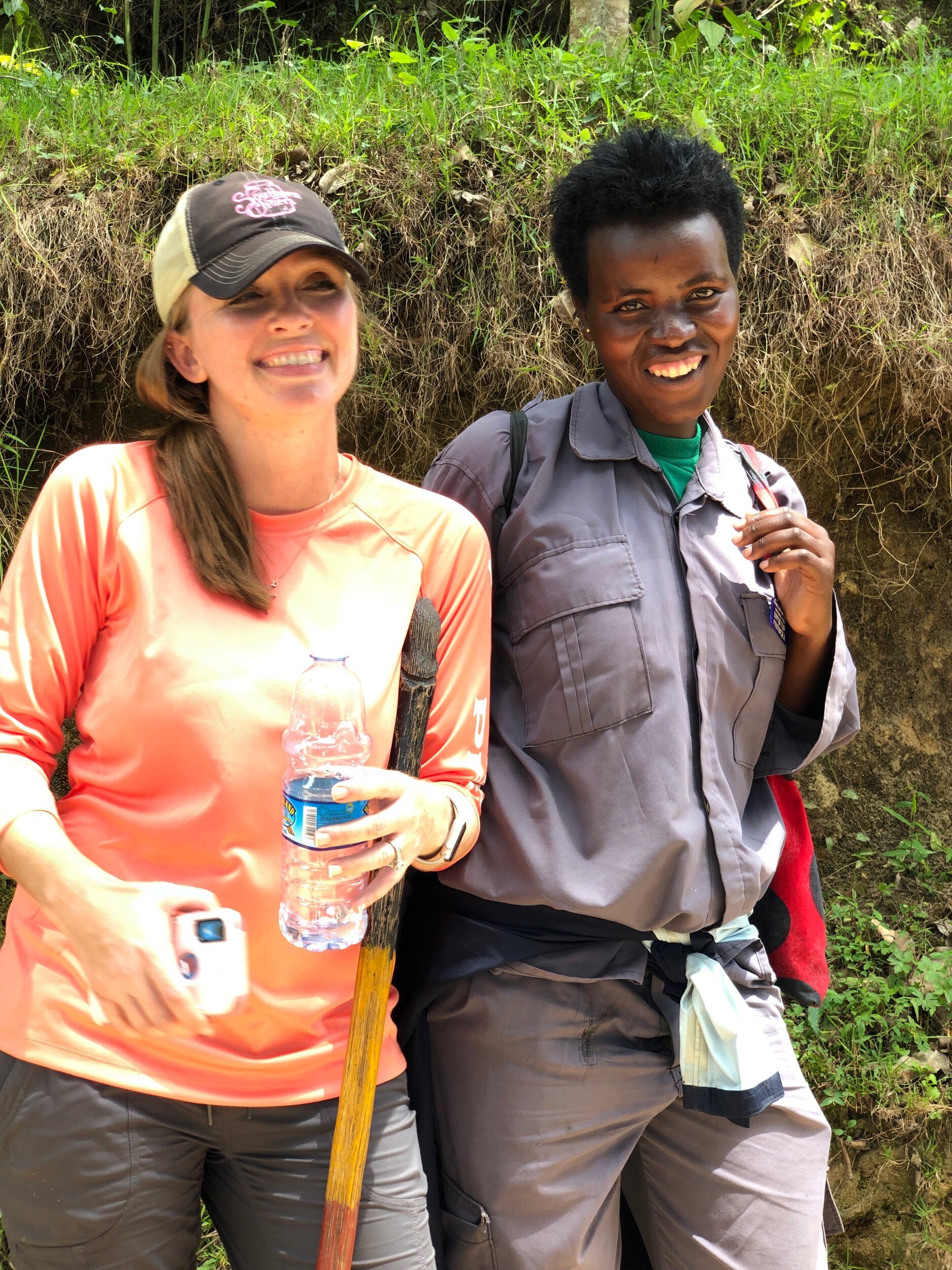
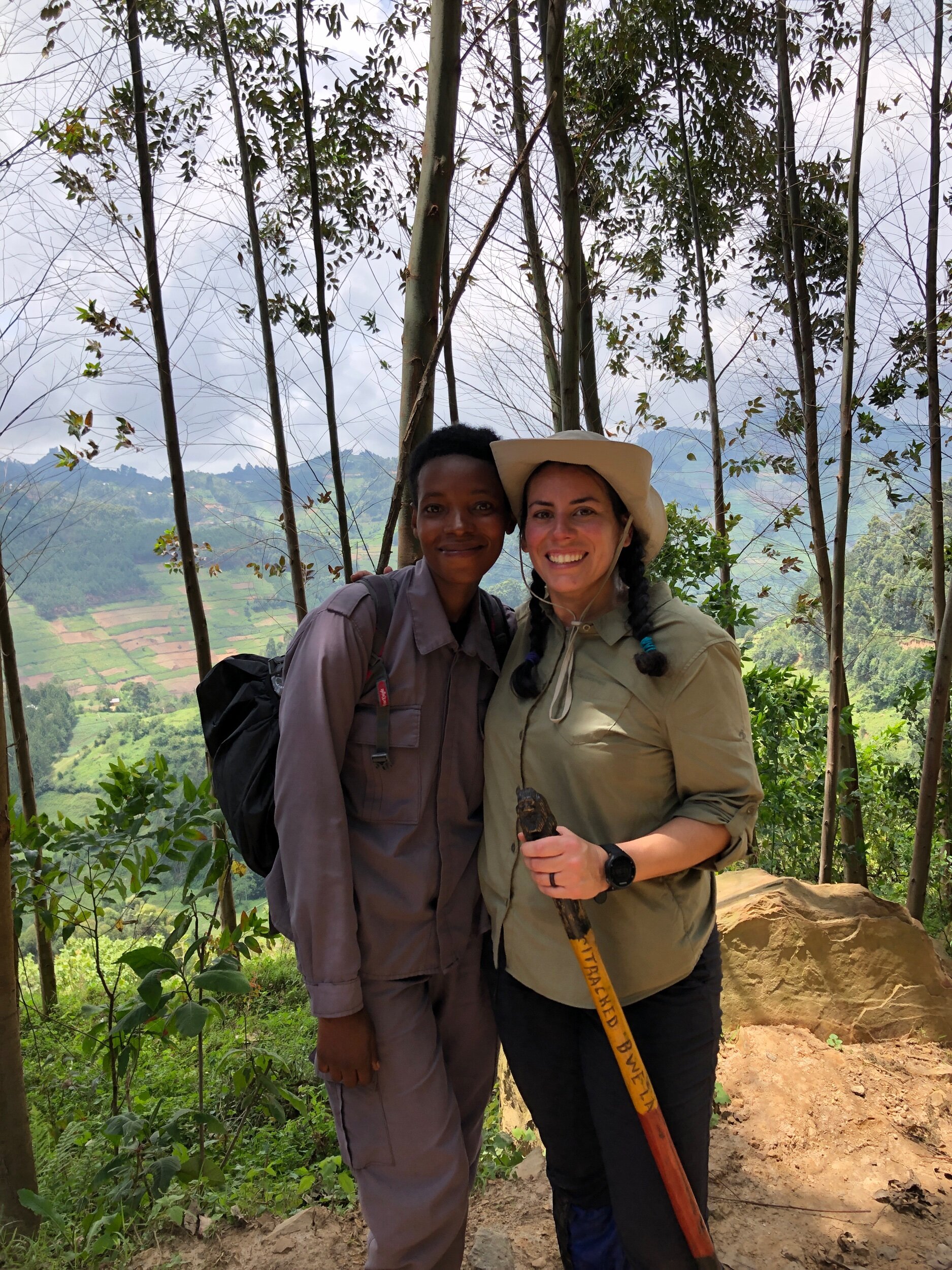
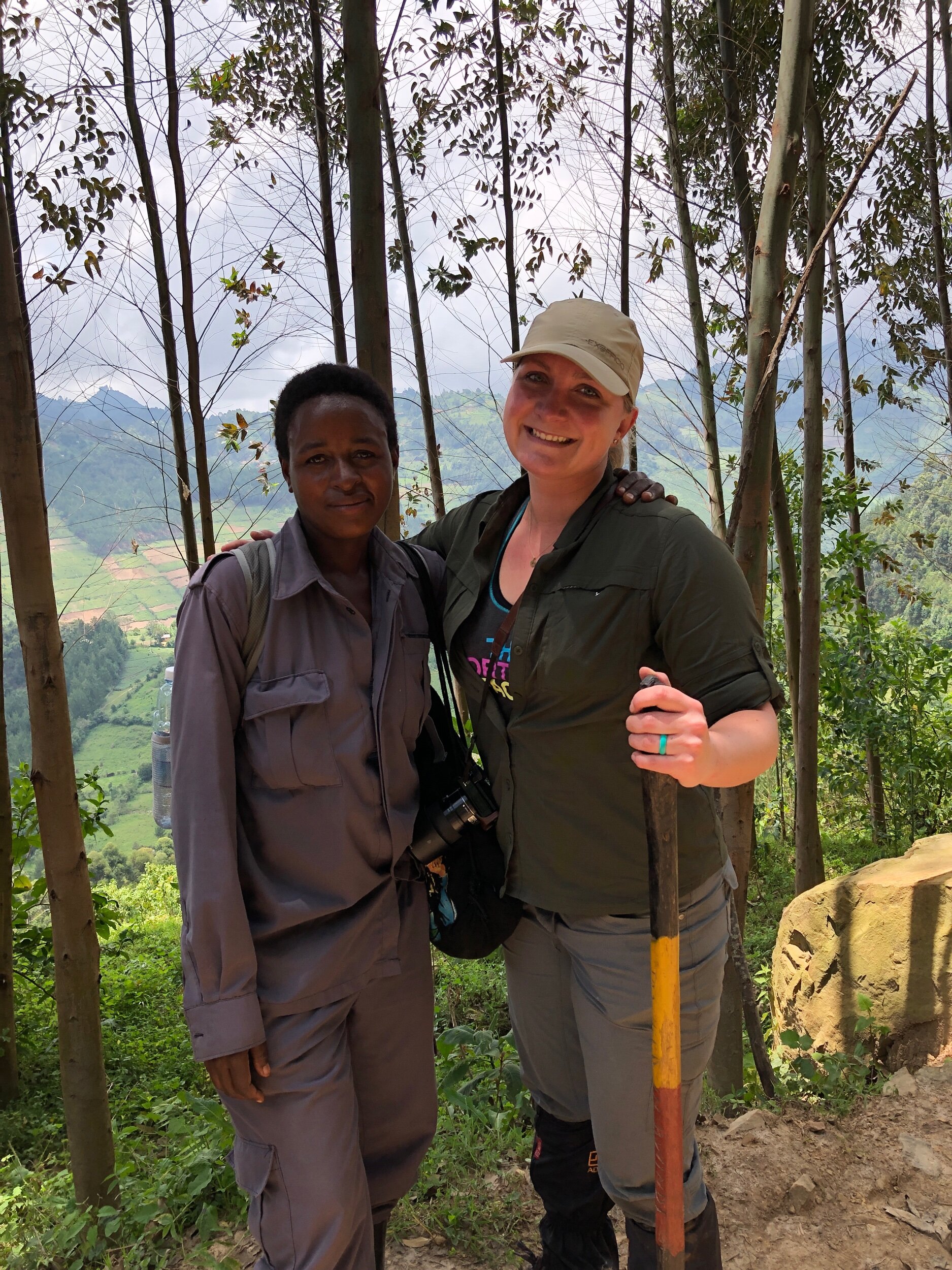
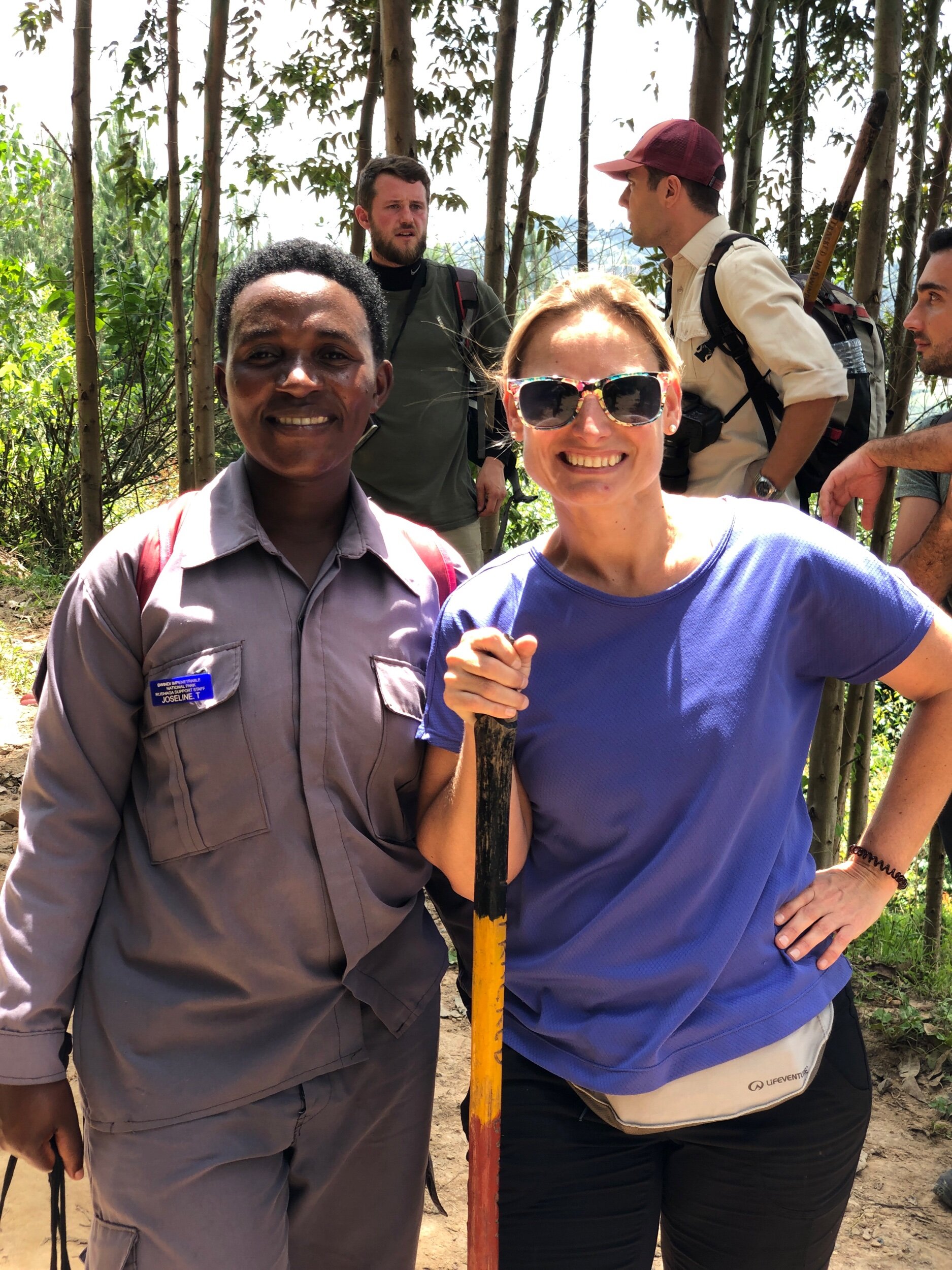
A porter (non-negotiable—get one!)
Walking stick (included with the porter)
Water
Gardening gloves
Bug spray
Gaiters or high socks
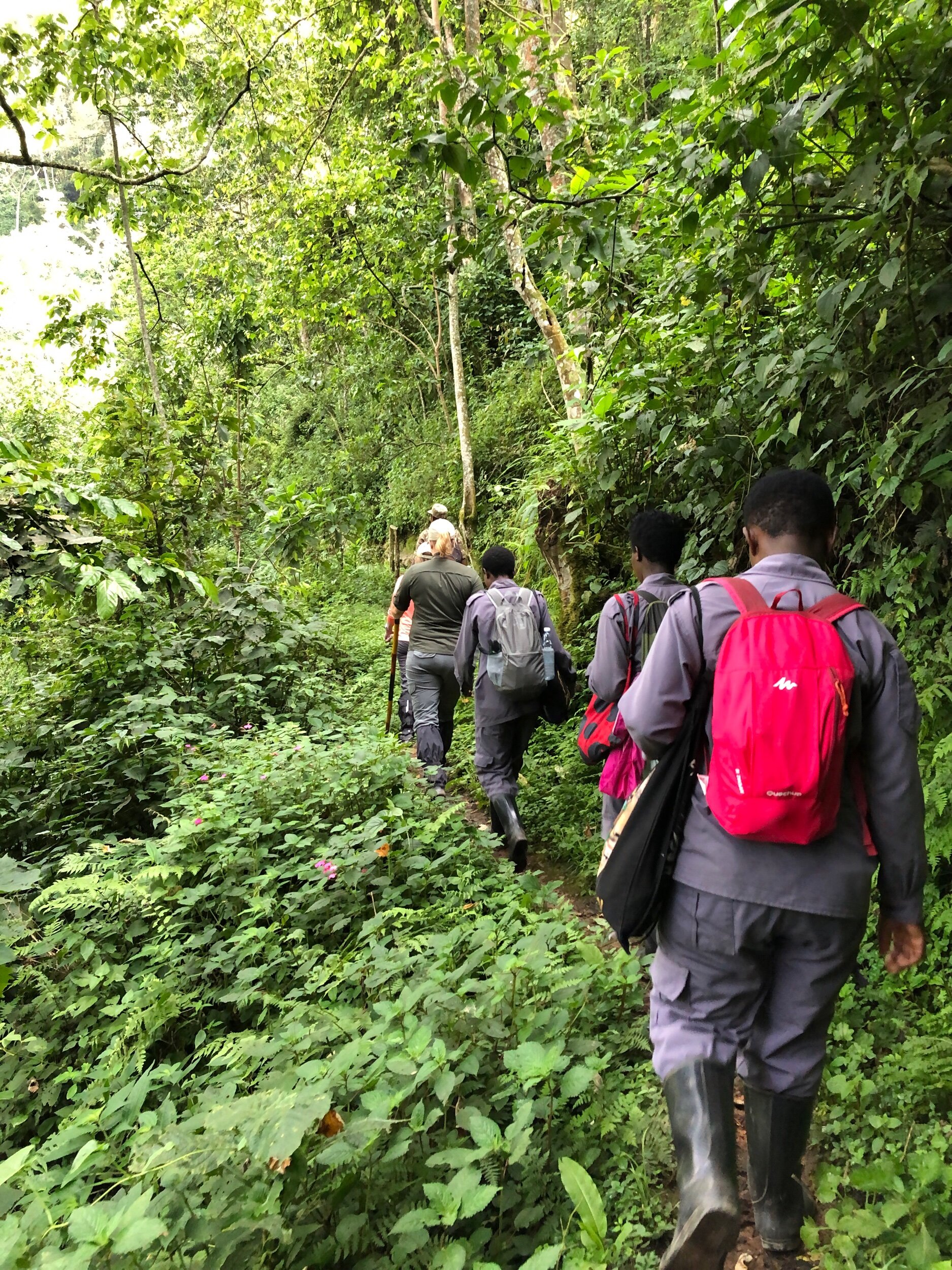
Porters typically cost about $15 USD, and that includes the walking stick. Tipping is appreciated and well-deserved. You’ll likely have two trackers, two guides, and a ranger with you. A standard tip is around $5 USD per person, but more is always appreciated.
Surprise Detour… Again
In true “Trip’n with Trina” fashion, our trek got interesting fast.
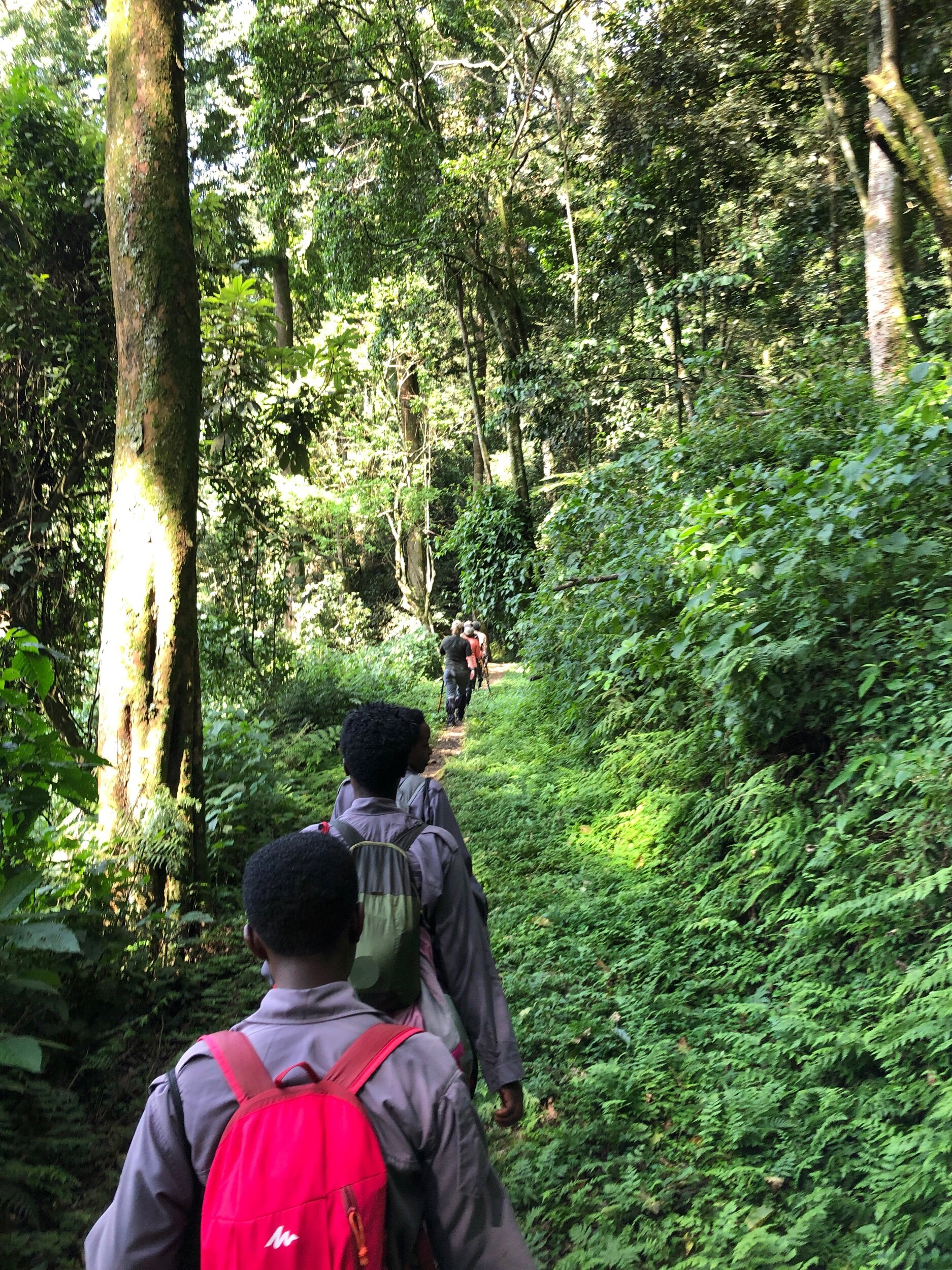
About an hour in, we found out we’d been tracking the wrong gorilla family. But thanks to all the snacks, drinks, and patience we packed (plus our incredible porters), we took it in stride. It’s best to prepare for anything—some hikes can take up to six hours depending on the gorilla group’s location.
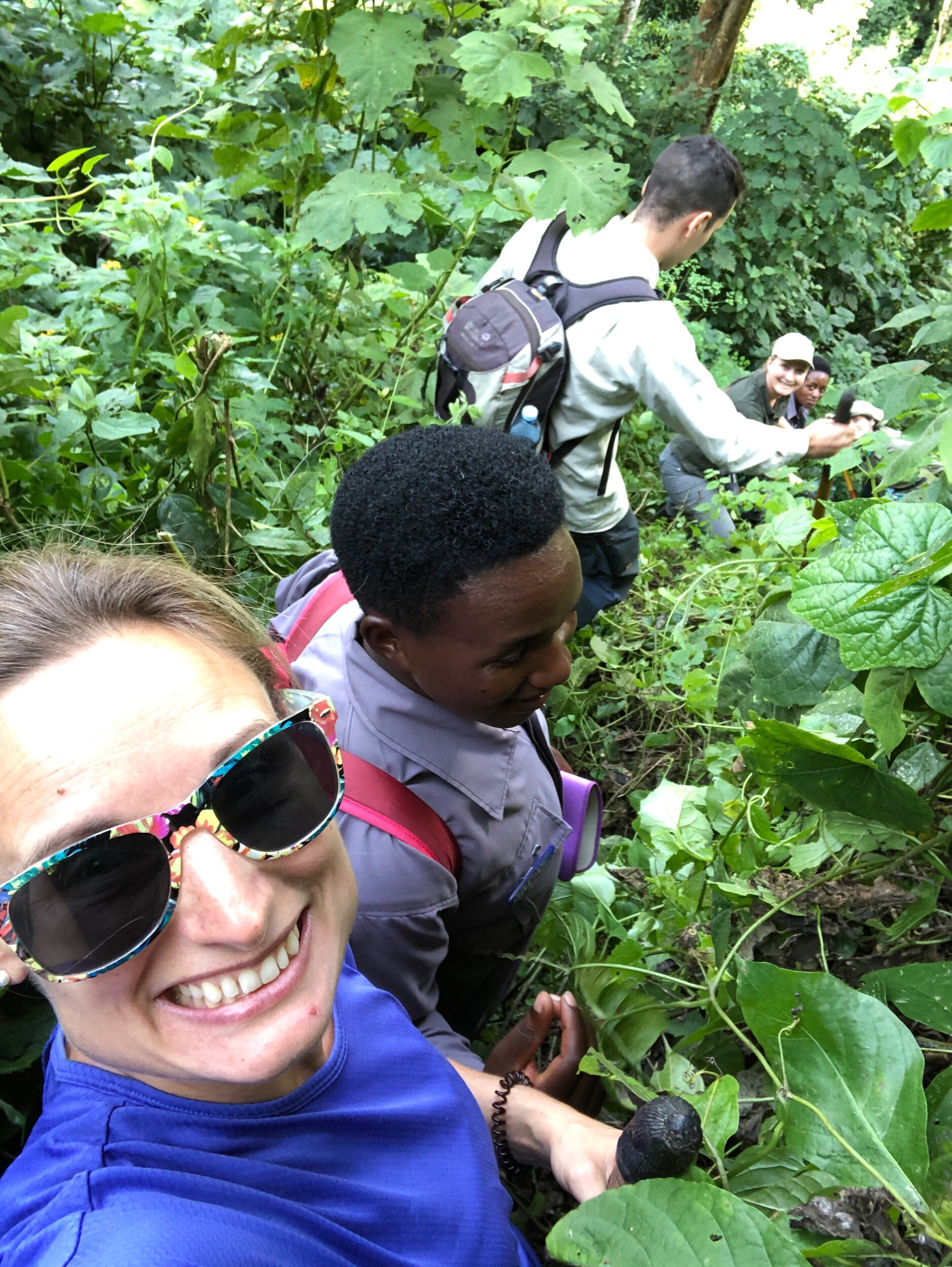
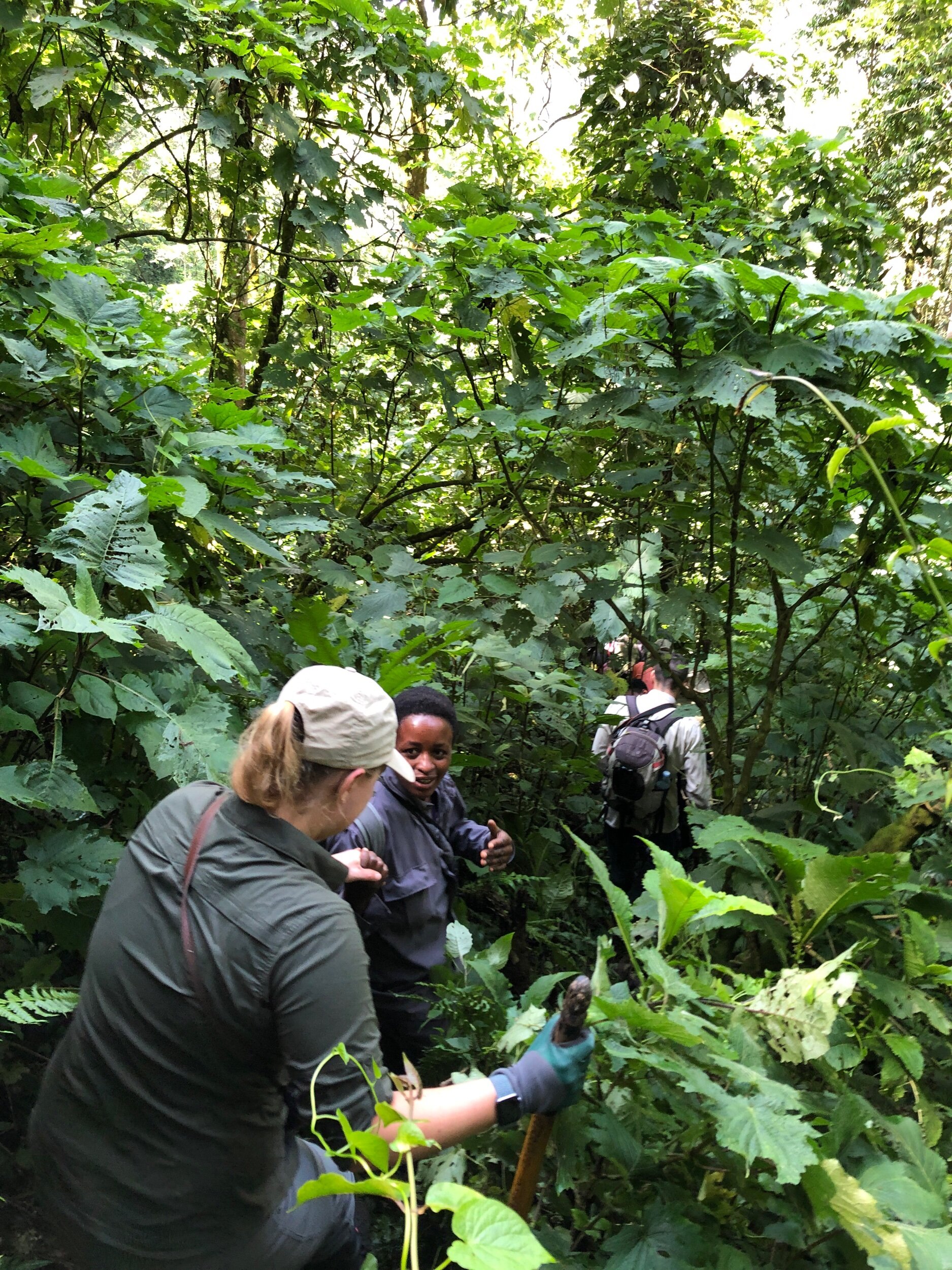
Once the trackers located the Mucunguzi family, we began the second leg of our hike—straight down the mountain through thick jungle. Even with good hiking boots, we slipped constantly. The foliage was wild, the terrain rough, and I now have even more respect for people who hike through this terrain regularly with machetes in hand.
Face-to-Face with a Silverback
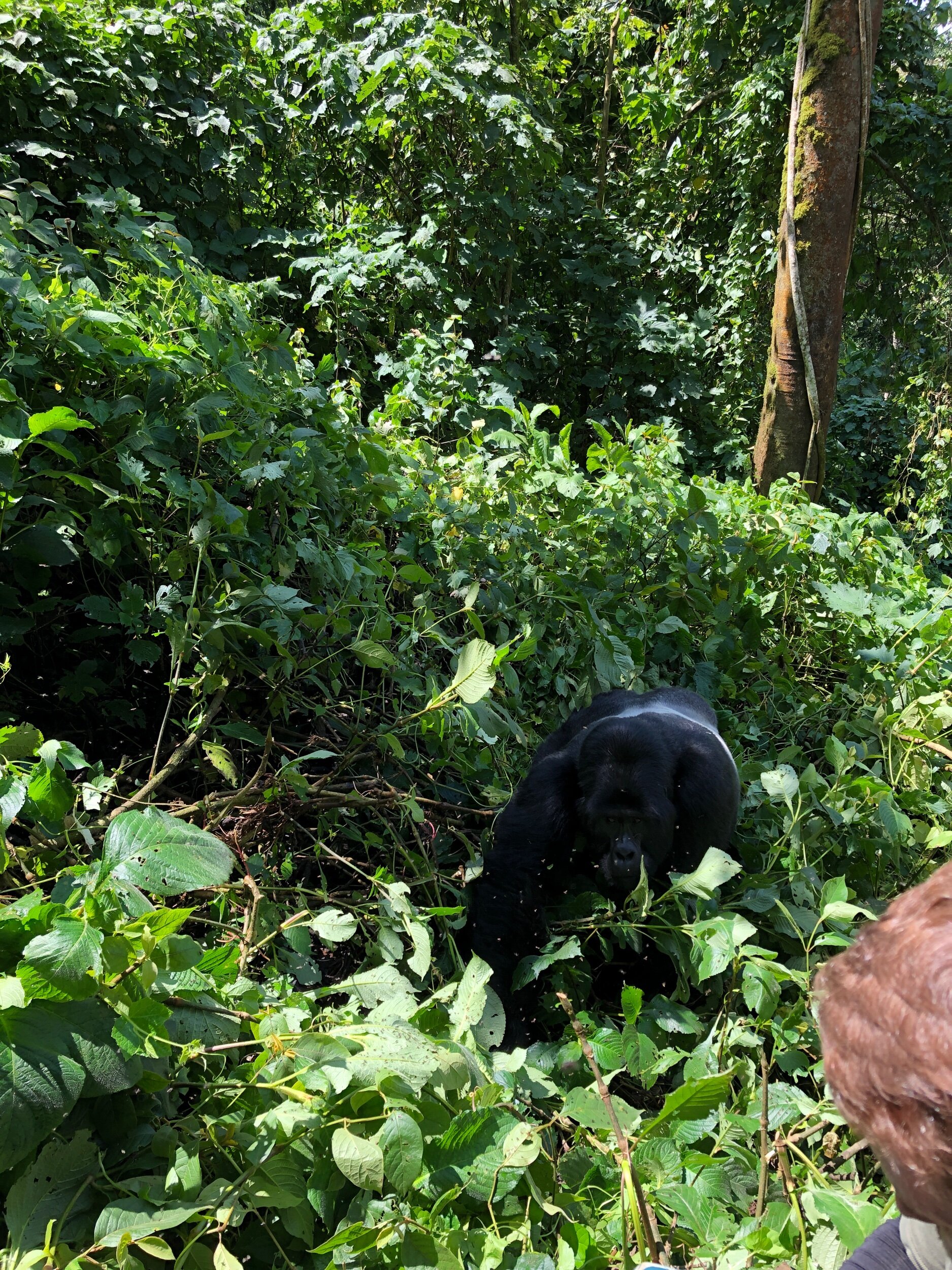
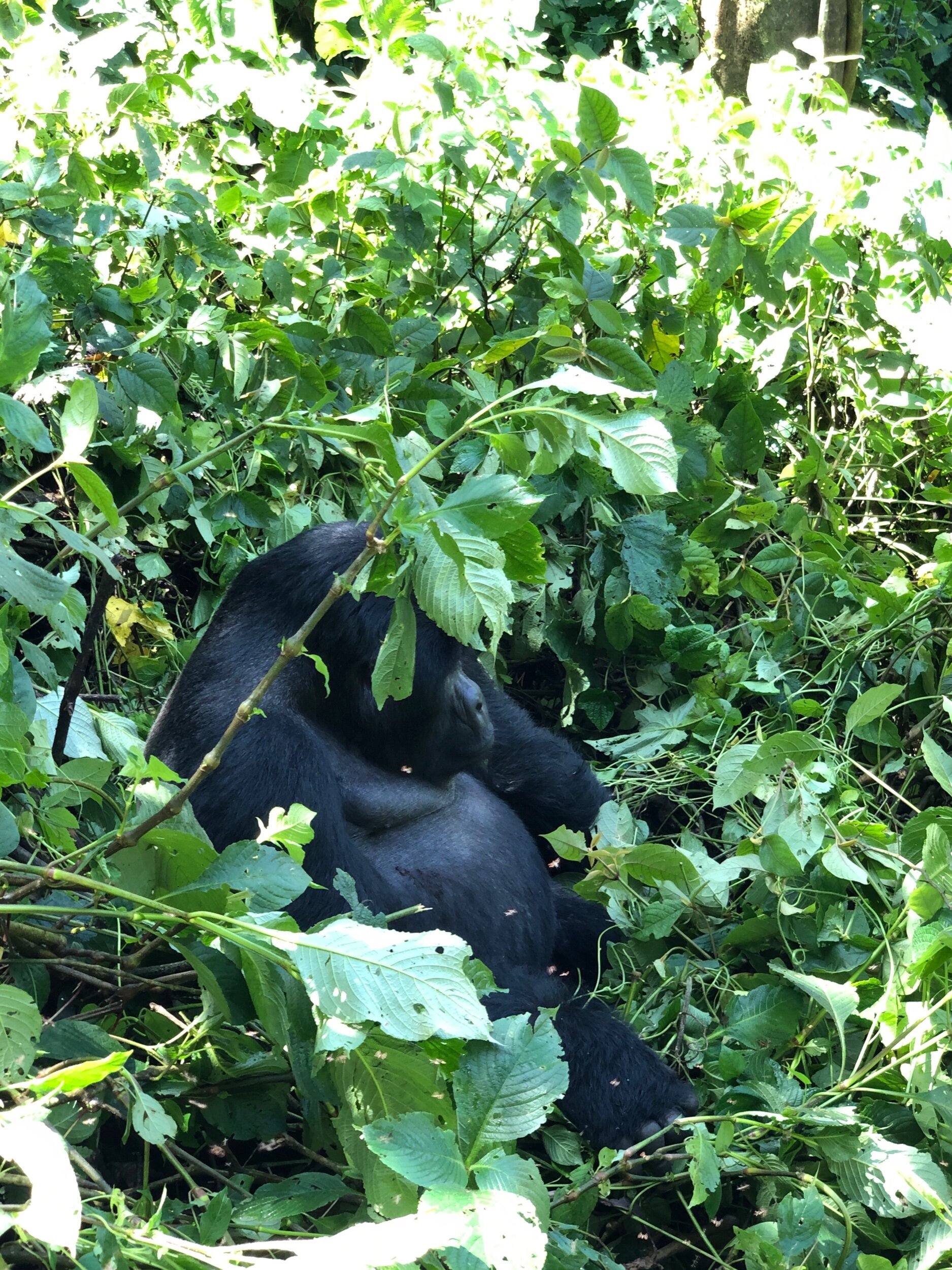
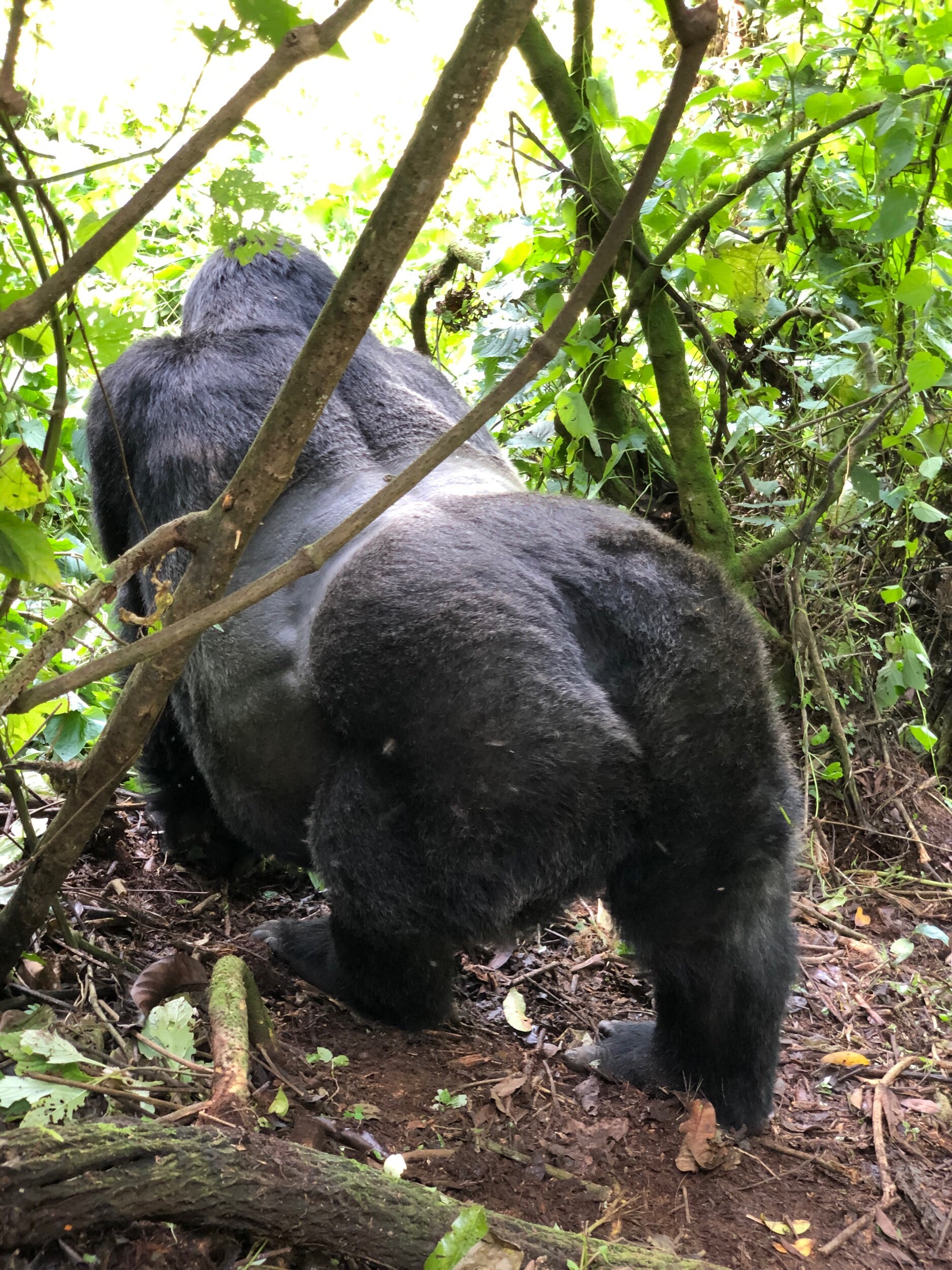
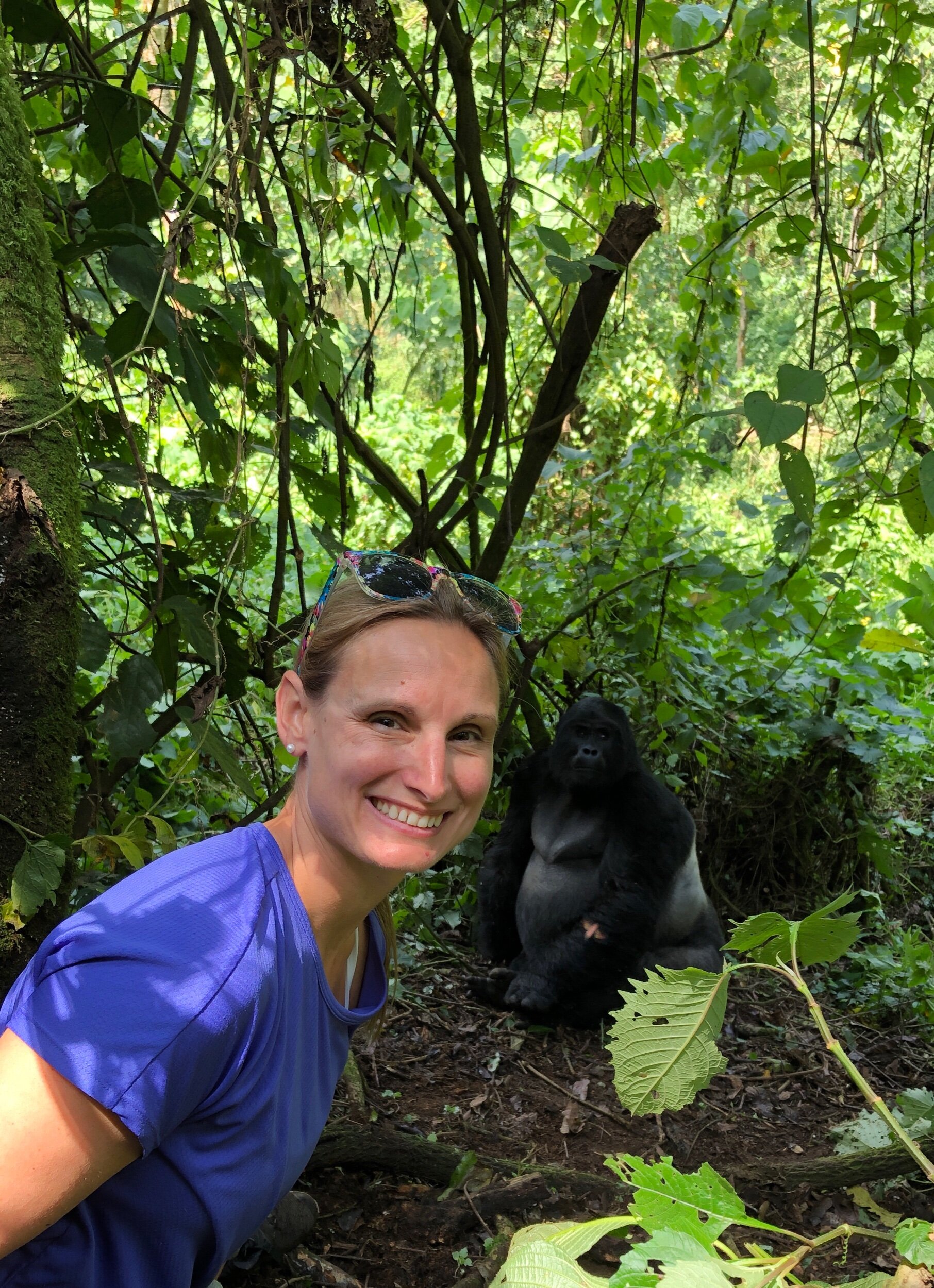
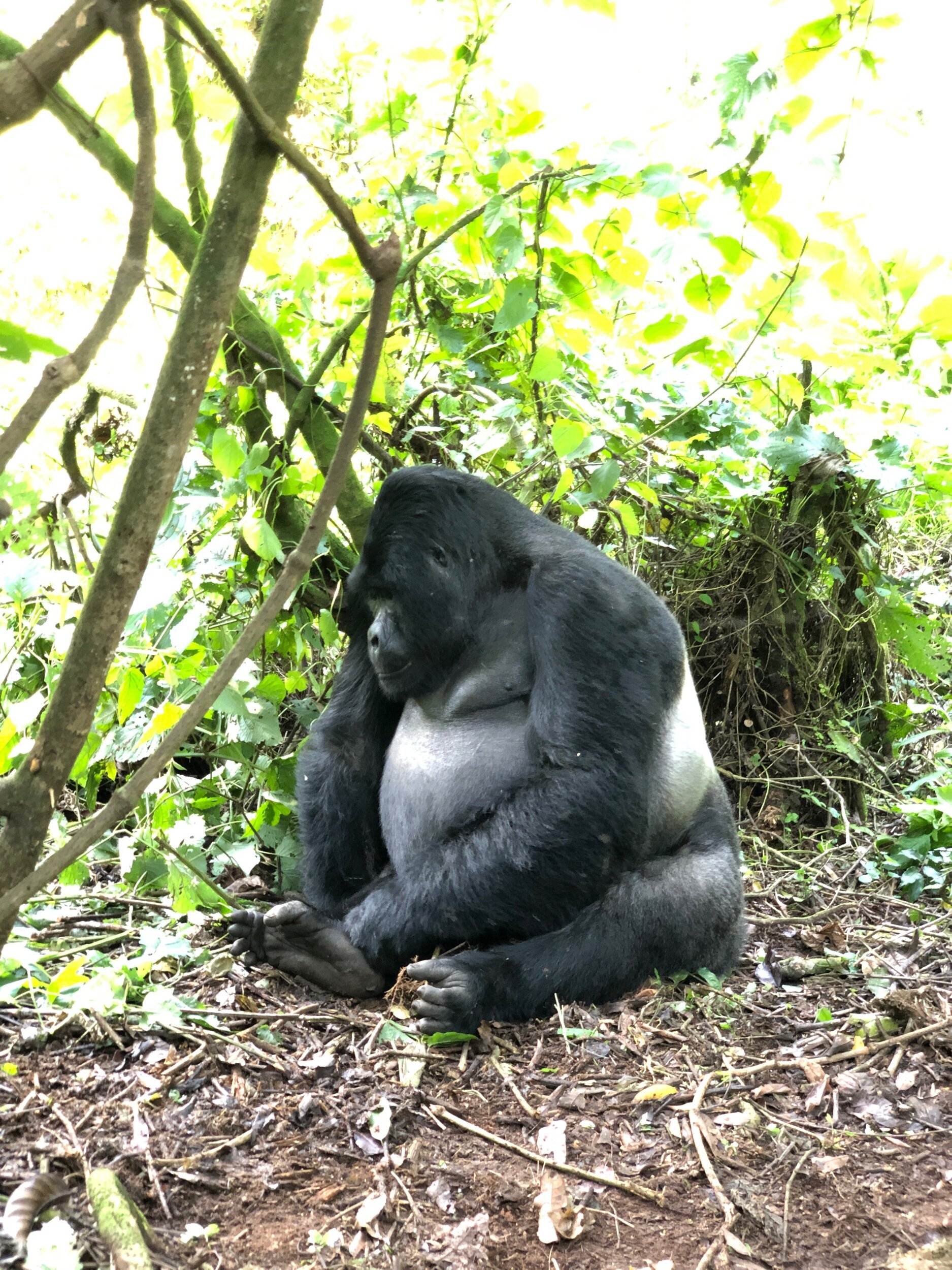
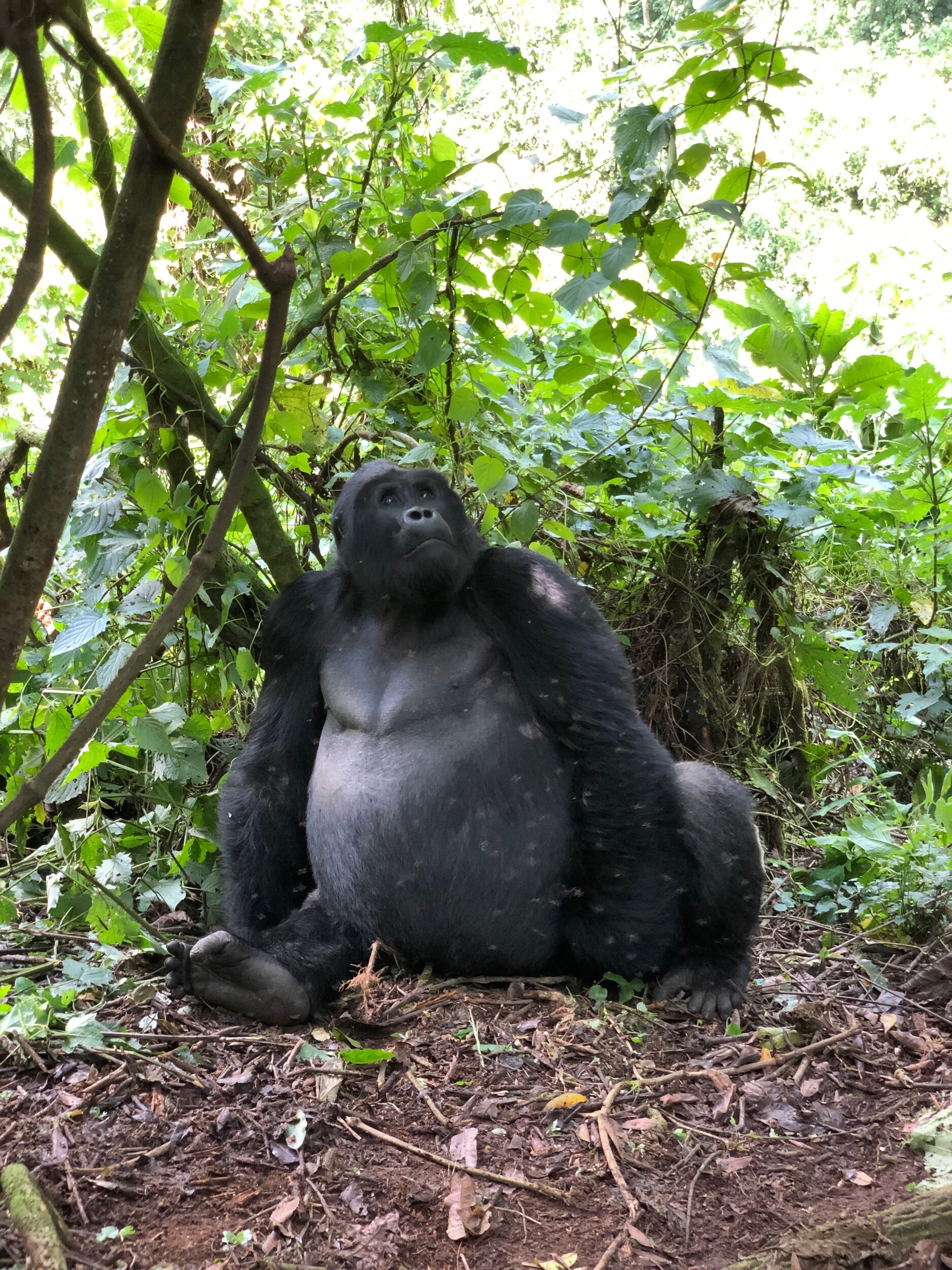
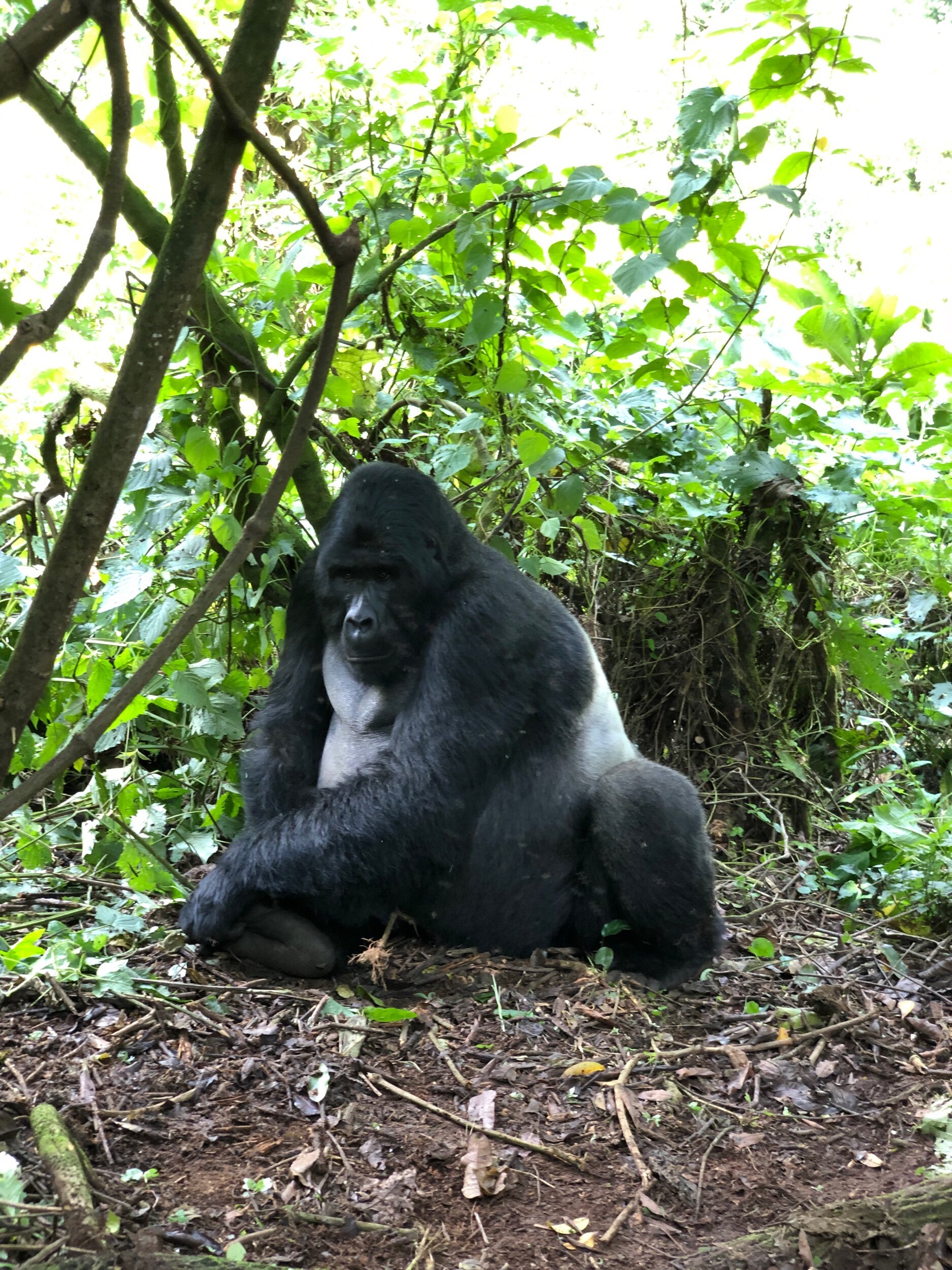
The first gorilla we encountered? The massive silverback.
Let’s just say… he wasn’t thrilled to see us.
The trackers were clearing brush near him when he suddenly charged, showing his teeth in a not-so-subtle warning. The golden rule of gorilla trekking is: don’t run if a gorilla approaches. But of course, most of our group panicked and scattered. Looking back, it’s funny. In the moment? Absolutely terrifying.
A powerful reminder that, while these gorillas are habituated to humans, they’re still wild animals—and we’re in their territory.
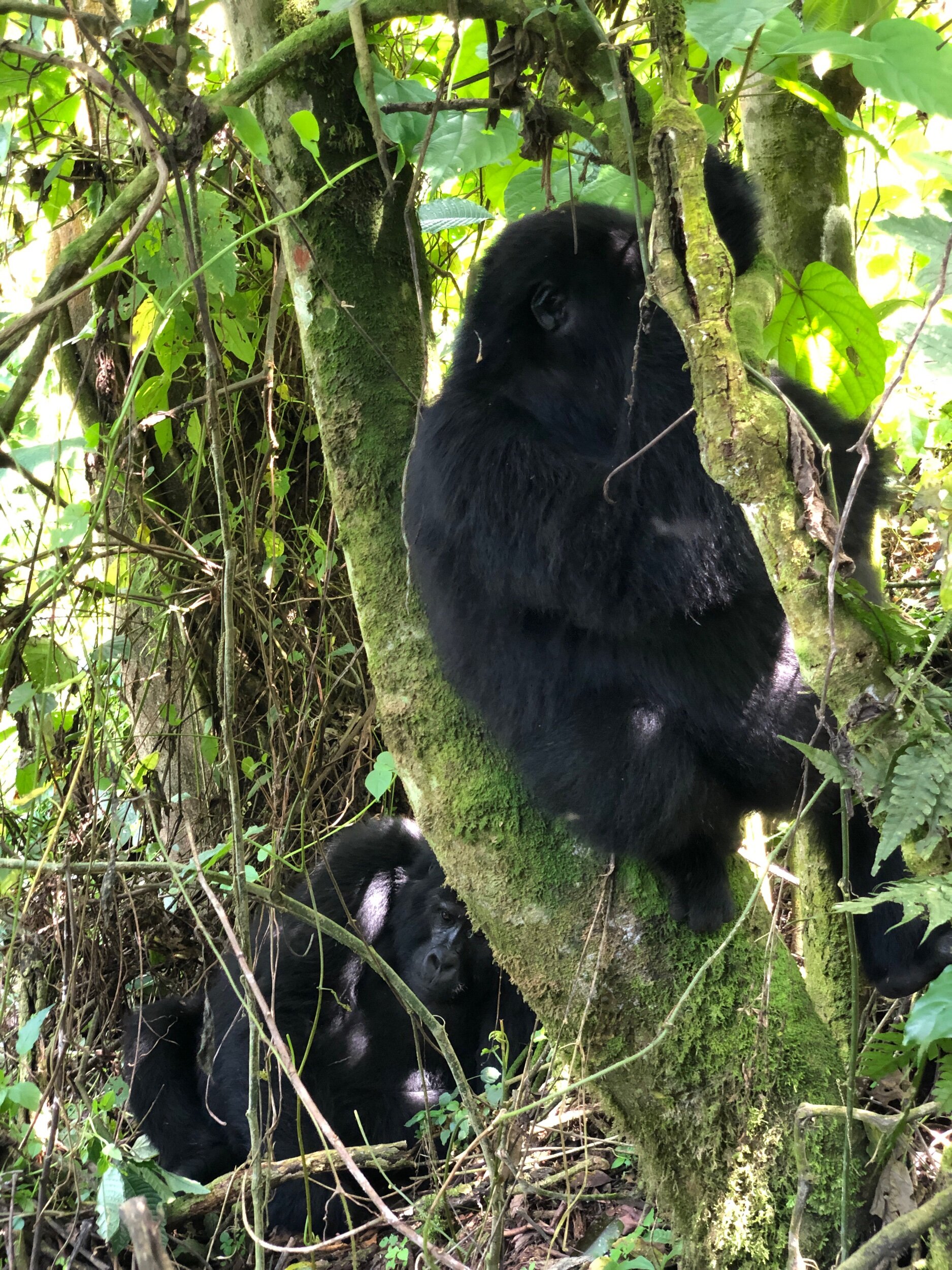
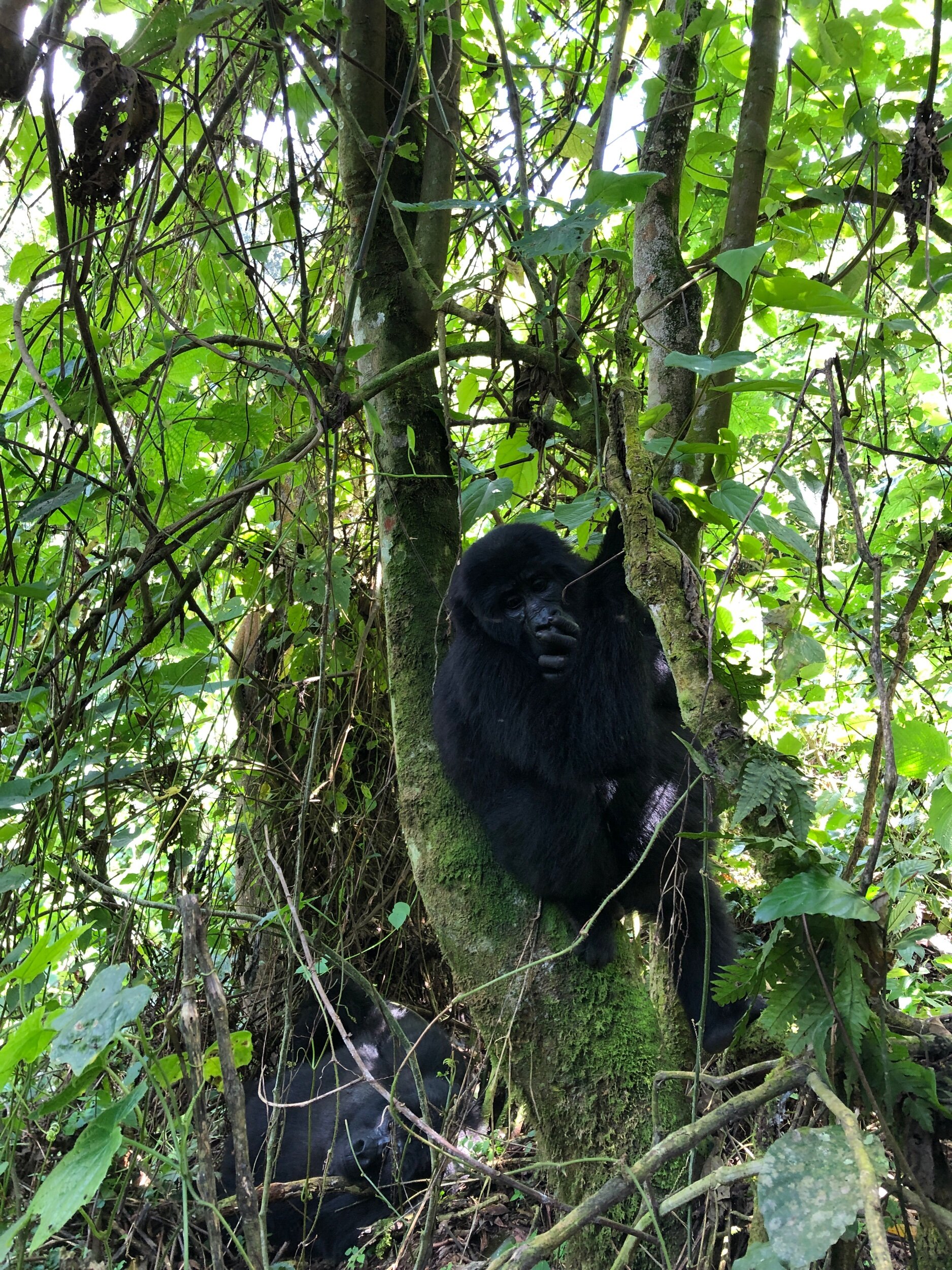
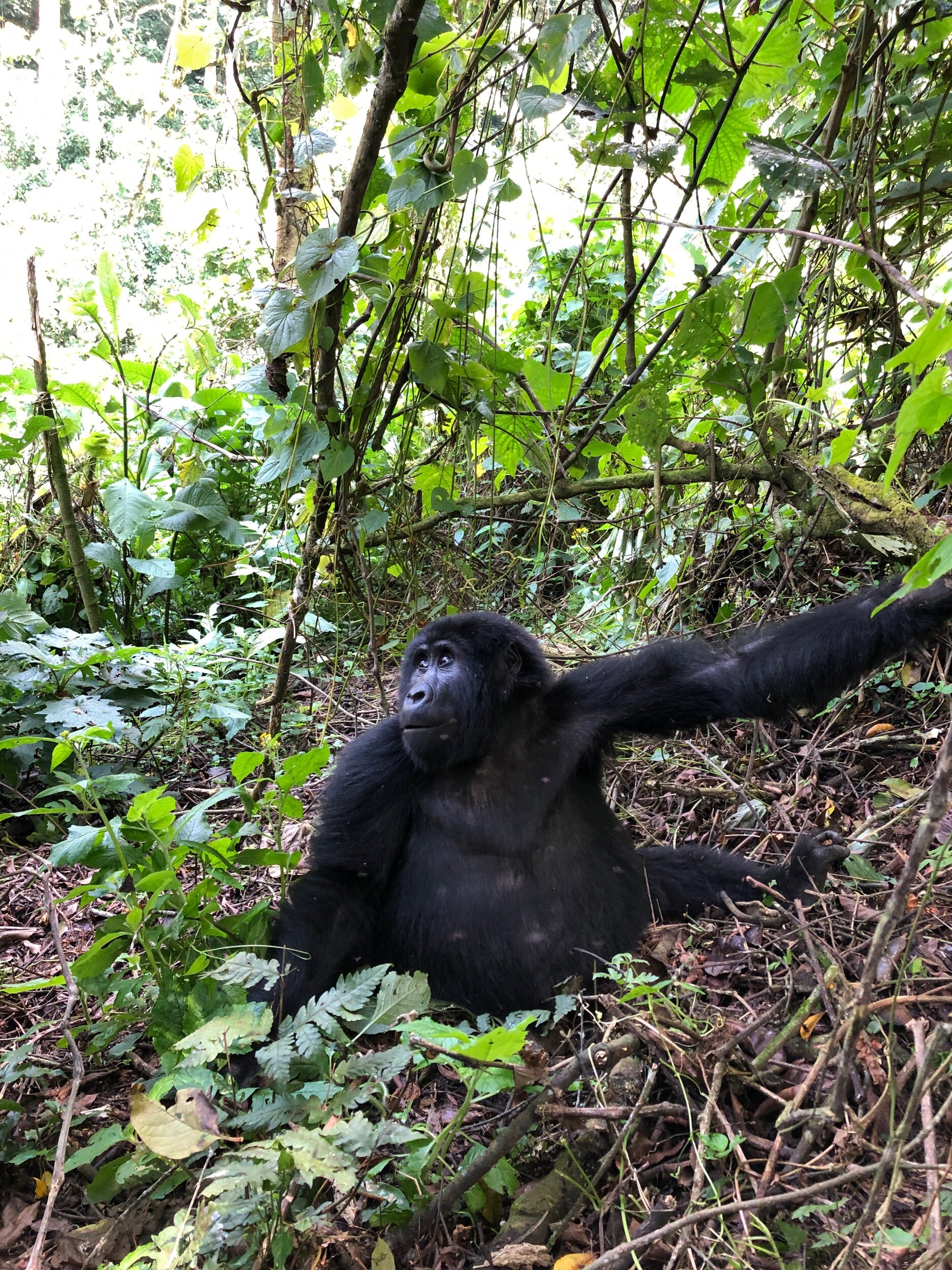
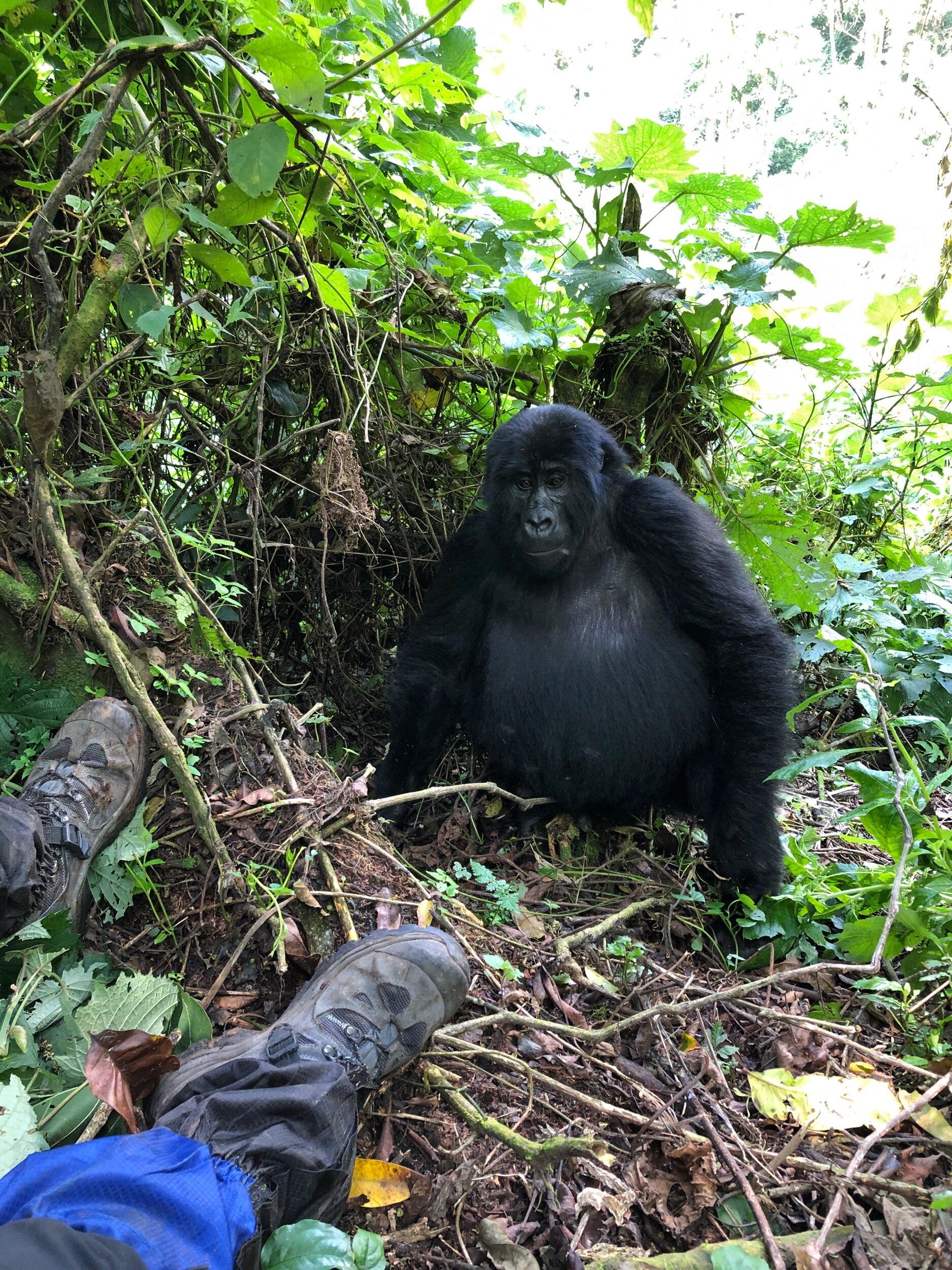
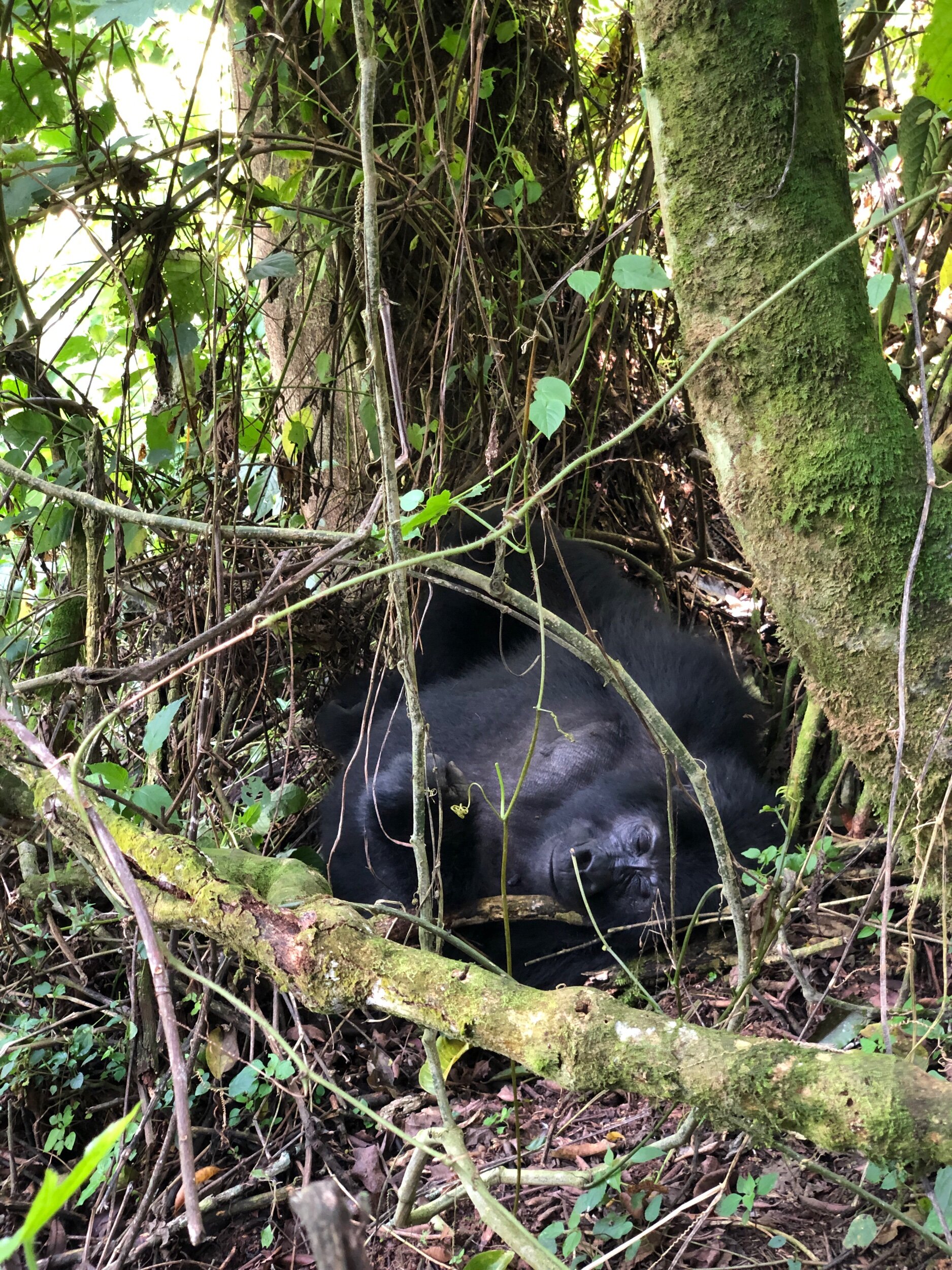
After he calmed down and found a comfy spot to nap, we moved on and found the mother and two babies. The little ones were playful and curious, and we did our best to stay still as they checked us out. You’re supposed to keep at least 7 meters of distance, but curious baby gorillas sometimes have their own ideas.
The hour we spent with them flew by—it was surreal, peaceful, and deeply humbling.
The Jungle Doesn’t Let You Leave Easily
The trek back out? Brutal. Straight up through thick undergrowth. At one point, we were literally swinging from vines to climb the steep sections. It felt like something out of Jumanji. But we made it, sweaty and proud.
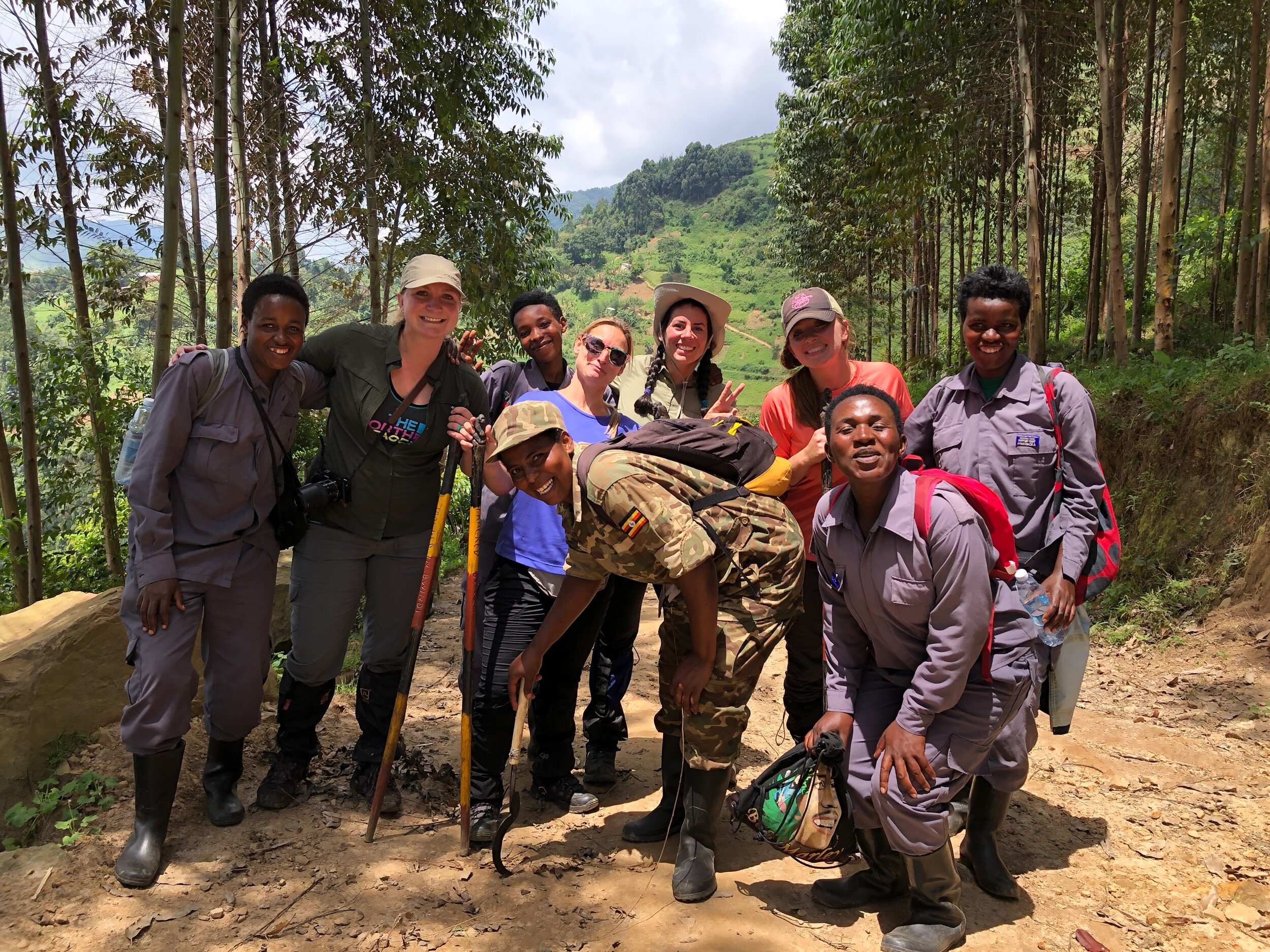
At the finish, we received a completion certificate, hugged our guides, and thanked them for the unforgettable experience. Our driver met us with our packed lunch, and we headed back to Kigali—physically exhausted but emotionally full.
Final Thoughts
If gorilla trekking is on your bucket list, don’t let delays, rain, or mid-air malfunctions stop you. This experience is one of the most powerful, humbling, and awe-inspiring things I’ve ever done. Uganda delivered in every way, and I’m so thankful we didn’t give up after our first attempt.
Happy Traveling,
Katrina